Egyptian Jerboa
Scientific name: Jaculus jaculus
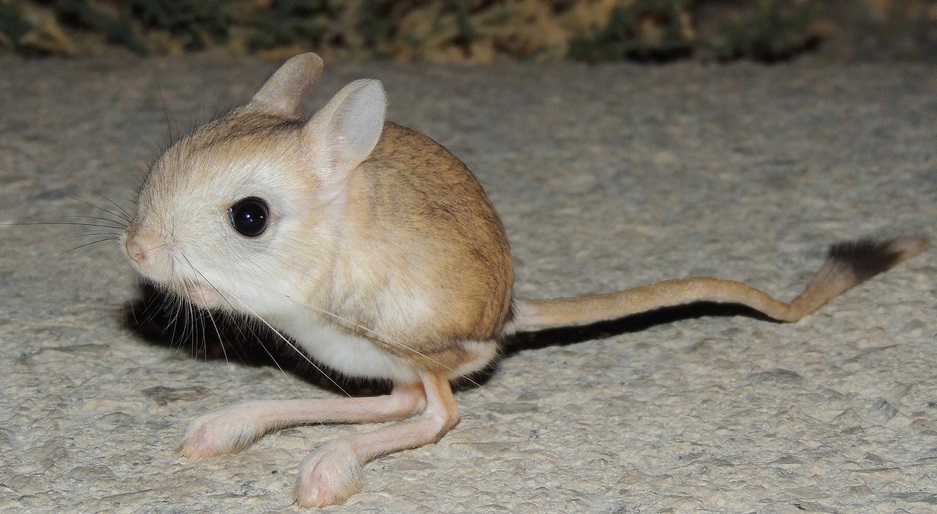
Jumping desert rodent with long hind legs and long tufted tail.
Quick facts
- Approximate size9–14 cm (body)
- Average weight40–70 g
- Life expectancy4–6 years
- ActivityNocturnal
Scientific name: Jaculus jaculus
Jumping desert rodent with long hind legs and long tufted tail.
What this species is like in its natural environment, with the climate, shelters and resources it needs.
The Egyptian jerboa is a small rodent adapted to nocturnal life in arid and sandy landscapes of North Africa.
Lives in dunes, sandy plains and rocky areas with little vegetation, digging deep burrows.
Spends the day in its burrow and emerges at night to forage, moving in quick erratic hops.
Its elongated hind legs, balancing tail and large eyes are key for moving and navigating at night in the desert.
Many populations are considered stable, though habitat alteration and climate change could affect them long-term.
Striking details about this species that show its biology and ecology in a different way.
Aspects to consider if this species is kept in captivity at specialized centers.
In captivity needs spacious terrariums with deep substrate for digging and objects that don't damage feet when jumping.
Diet should be controlled in fats and sugars, based on appropriate seed mixes and some vegetables.
Very sensitive to stress from rough handling; handling should be calm, preferring observation to restraint.
General information aimed at professional facilities and authorized centers.
In responsible hands can be kept in small compatible groups with abundant enrichment.
Important to avoid cages with bars where it could injure feet while jumping.
Although it may seem "small and simple," requires planning and knowledge of its desert needs.
This information is for educational purposes and does not replace advice from specialized professionals or consultation of current legislation.