Fruit Fly
Scientific name: Drosophila melanogaster
Tiny insect that has enabled key discoveries about inheritance, development and evolution.
Quick facts
- Approximate size3–4 mm
- Average weightVery low
- Life expectancyWeeks
- ActivityDiurnal
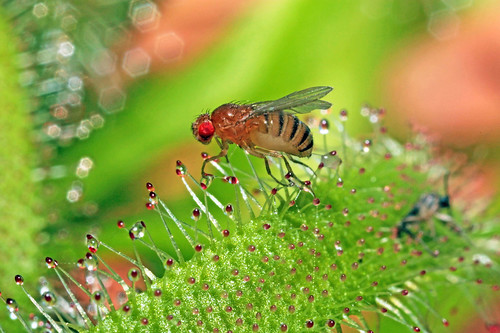
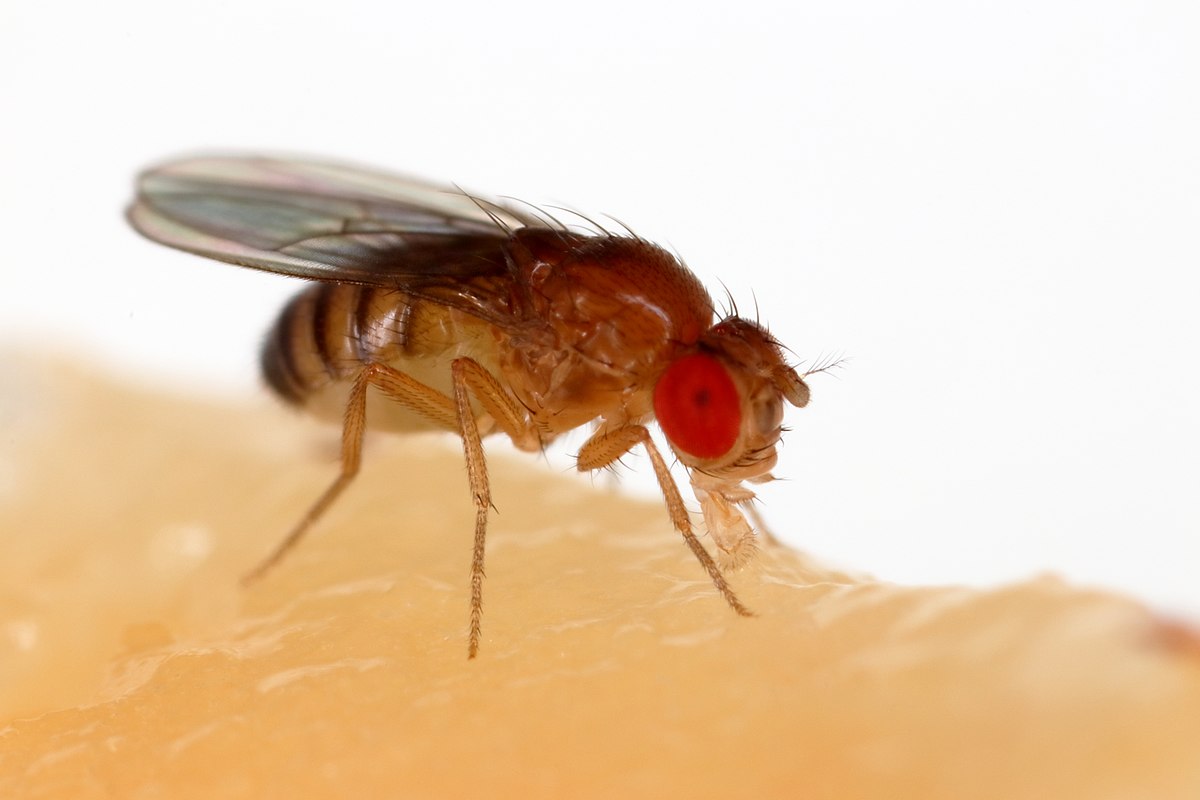
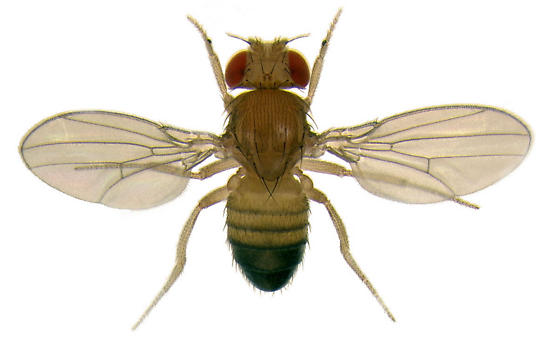
Scientific name: Drosophila melanogaster
Tiny insect that has enabled key discoveries about inheritance, development and evolution.
How this species lives in its natural environment, with the climate, shelters and resources it needs.
The fruit fly is an example of how a common insect can become a key tool for science.
It appears anywhere there is fermenting fruit or sweet plant matter in decomposition.
Adults fly erratically around fruits and search for suitable places to lay eggs.
Its relatively simple and well-studied genome makes it an ideal model for genetic experiments.
It is not threatened; its main use is in basic research and education.
Striking details about this species that show its biology and ecology in a different way.
Aspects to consider if this species is kept in captivity in specialized centers.
In the laboratory it is kept in jars with standard culture media and controlled densities.
Handling and sacrifice must follow ethical and biosecurity standards appropriate to the type of project.
It is not an insect intended for keeping as a "pet", but as a study tool.
General information aimed at professional facilities and authorized centers.
Ideal for simple educational experiments on inheritance and life cycle.
It requires little space and cheap materials, making it accessible to many centers.
It is advisable to avoid massive escapes, although the environmental impact is usually low.
It allows illustrating how the scientific method works in practice.
Whenever possible, it is preferable to observe insects in their natural environment, promote favorable habitats (flowers, ponds, hedges) and use captive breeding only for justified educational or conservation purposes.