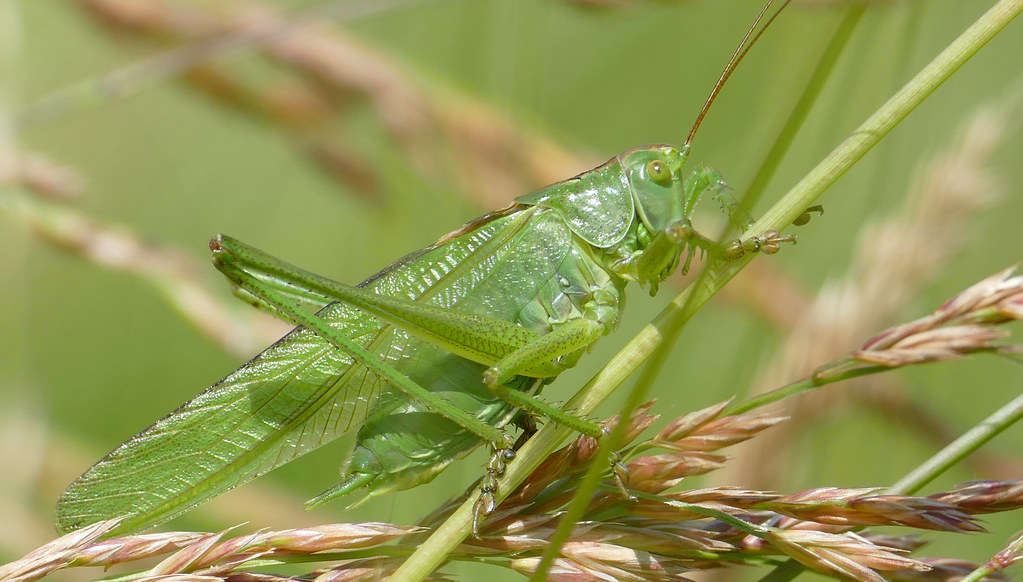
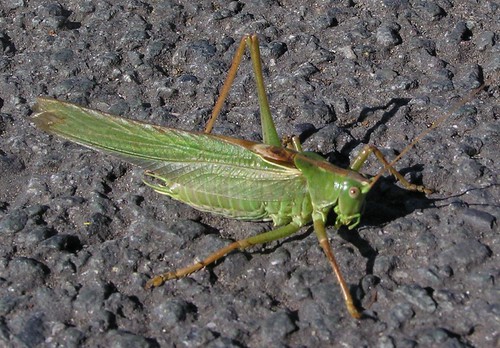
Great Green Bush-cricket

Scientific name: Tettigonia viridissima

Type: Insect Main biome: Temperate Forest Difficulty: Fácil

Inhabitant of meadows and scrublands that contributes to the food chain as prey and consumer of plants and insects.

Quick facts

  • Approximate size3–5 cm
  • Average weight1–2 g
  • Life expectancy1 year (including nymphal phase)
  • ActivityMainly nocturnal
Great Green Bush-cricket

Basic information

  • 🏡Habitat: grasslands, scrublands, and forest edges with tall grass and shrubs.
  • 🍏Diet: omnivorous; consumes leaves, flowers, and other smaller insects.
  • 👫Sexual dimorphism: females with long saber-shaped ovipositor; males with more developed stridulatory organs.
  • 🐾Predators: birds, reptiles, insectivorous mammals, and large spiders.

Life in the wild

How this species lives in its natural environment, with the climate, shelters and resources it needs.

Species overview

The great green bush-cricket is a typical representative of European grassland orthopterans.

Natural habitat

It prefers areas with tall vegetation where it can climb, hide, and sing.

Behavior

Males sing from elevated perches, and it moves both by jumping and flying.

Special features

Its long antennae help it orient itself and detect vibrations and odors in vegetation.

Conservation and threats

It depends on the conservation of grasslands and scrublands; intensive agriculture and pesticide use are threats.

Curiosities

Striking details about this species that show its biology and ecology in a different way.

  • 🌿Its song can be heard tens of meters away on quiet nights.
  • It is a good indicator of well-conserved grasslands and scrublands.
  • 🔎Nymphs resemble adults but without fully developed wings.
  • 🧬It is often confused with other less striking green grasshoppers.

Welfare profile

Aspects to consider if this species is kept in captivity in specialized centers.

Space and facilitiesLow

In temporary captivity it requires tall containers with branches and grasses.

Environmental conditionsMedium

It needs a varied diet that includes fresh plant material and, occasionally, small prey.

Handling and stressMedium

Excessive handling can break fragile legs or antennae.

Great Green Bush-cricket in captivity

General information aimed at professional facilities and authorized centers.

⚠️ Before keeping insects like this species, it is important to consult local regulations and always consider whether it is really necessary to remove them from their natural environment.

Suitable facilities

Suitable for brief observations in educational contexts, with subsequent release in the same habitat.

Feeding in responsible centers

It allows discussion of sound in insects and acoustic communication.

Handling and welfare

It is not appropriate to keep it permanently in small enclosures without vegetation structure.

Ethical message

On field trips, listening to it helps assess the quality of the natural soundscape.

Imagen ampliada