Kirk's Dik-Dik
Scientific name: Madoqua kirkii
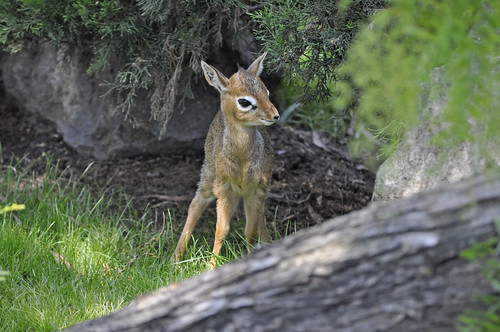
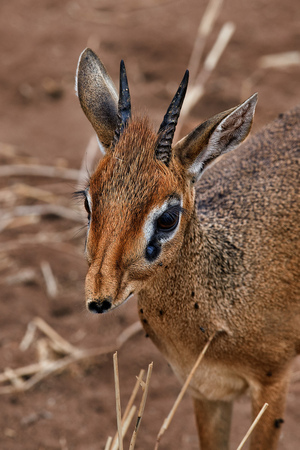
Small antelope with large eyes and elongated snout inhabiting savannas and dry scrubland.
Quick facts
- Approximate size30–40 cm (height)
- Average weight3–6 kg
- Life expectancy10 years
- ActivityCrepuscular
Scientific name: Madoqua kirkii
Small antelope with large eyes and elongated snout inhabiting savannas and dry scrubland.
What this species is like in its natural environment.
Kirk's dik-dik is one of Africa's smallest antelopes, adapted to dry environments with scattered vegetation.
Prefers mosaics of scrubland and clearings where it can feed and quickly shelter among vegetation.
Forms stable pairs that mark territory with secretions and droppings, staying alert to potential threats.
Its small size and discreet behavior allow it to go unnoticed despite living in open areas.
Although not among the most threatened antelopes, hunting and habitat transformation can affect local populations.
Striking details about this species.
Aspects to consider in captivity.
In captivity needs spacious outdoor enclosures with shrub vegetation and safe refuge areas.
Requires quality herbivore diet with forage, leaves and mineral supplements.
Very sensitive to stress from predator proximity (even visual) and loud noises.
Information for professional facilities.
Mainly kept in wildlife reserves and zoos experienced with small ungulates.
Captive breeding is possible if social structure and minimum space are respected.
In environmental education can help explain antelope diversity and importance of dry scrubland.
This information is for educational purposes.