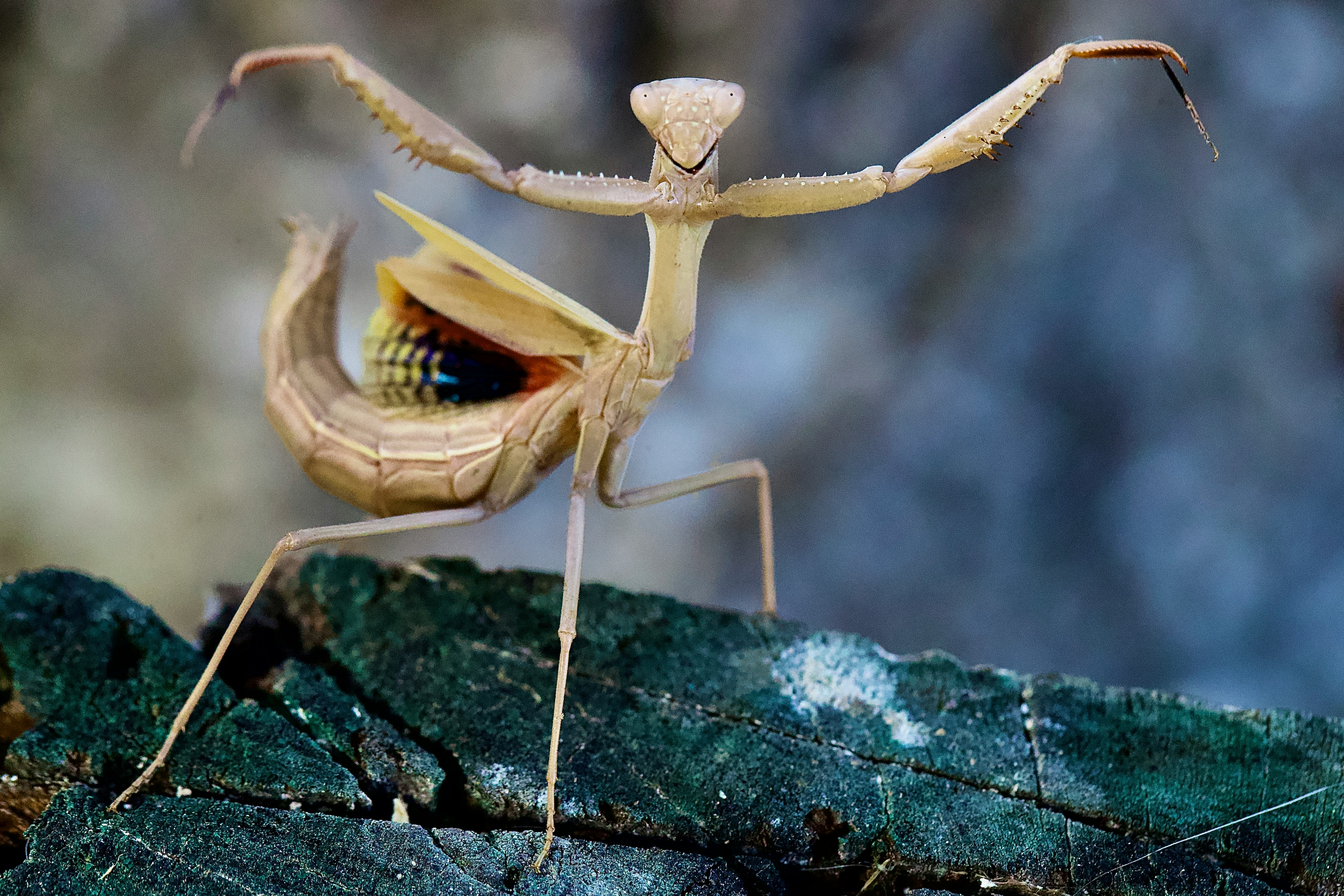
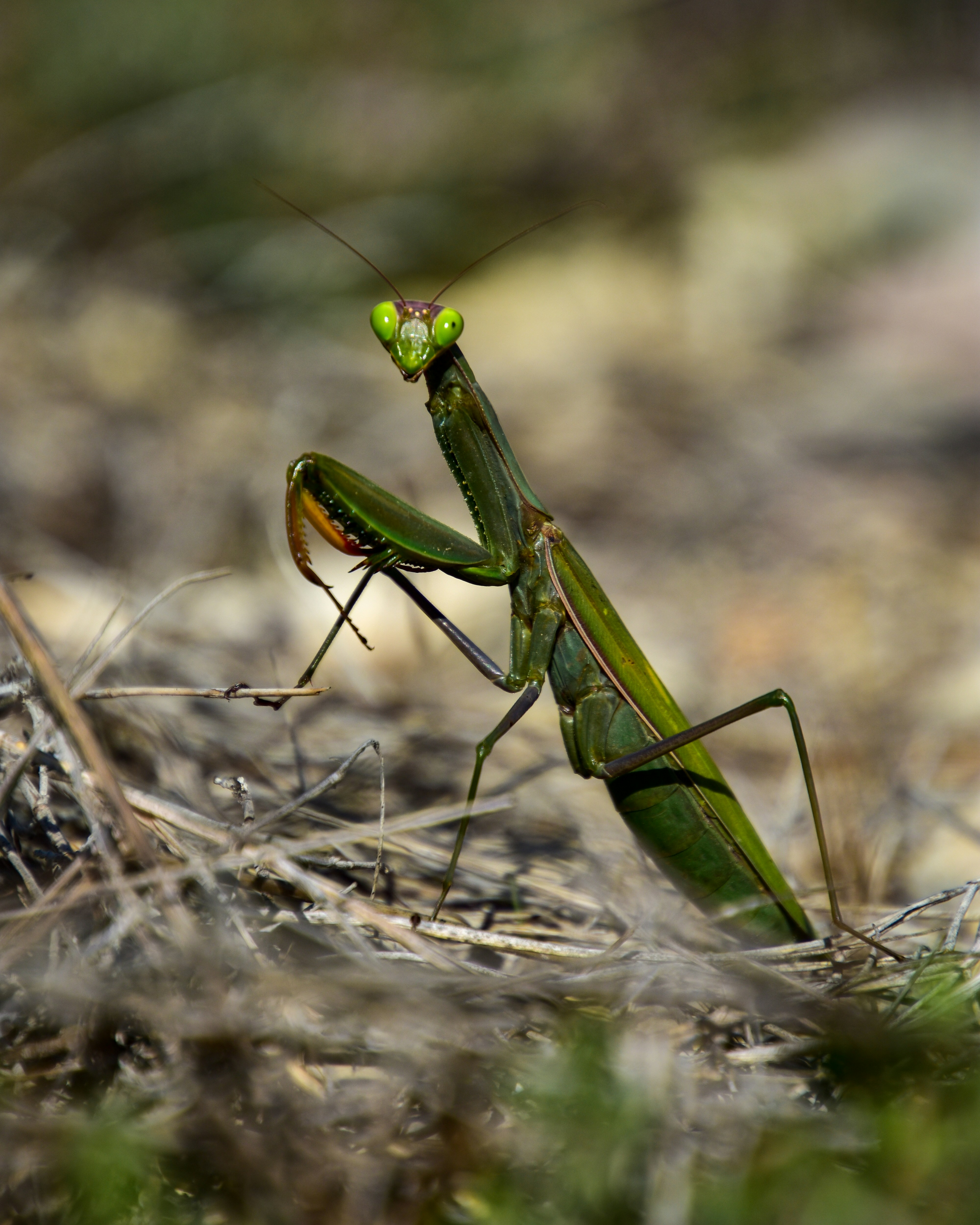
Praying Mantis

Scientific name: Mantis religiosa

Type: Insect Main biome: Temperate Forest Difficulty: Media

Predator with slow movements and lightning-fast attacks, icon of hunting insects.

Quick facts

  • Approximate size5–7 cm (females larger)
  • Average weight3–5 g
  • Life expectancyApproximately 1 year
  • ActivityDiurnal / crepuscular
Praying Mantis
Praying Mantis
Praying Mantis

Basic information

  • 🏡Habitat: scrublands, gardens, crops, and grasslands with vegetation where it can camouflage.
  • 🍏Diet: predator of other insects and small invertebrates that it captures with its spiny front legs.
  • 👫Sexual dimorphism: females are usually larger and more robust than males.
  • 🐾Predators: birds, small reptiles, large spiders, and other larger mantises.

Life in the wild

How this species lives in its natural environment, with the climate, shelters and resources it needs.

Natural habitat

It is found in scrubland areas, gardens, crops, and forest edges, where it can camouflage among vegetation and wait for its prey.

Predatory behavior

It is an ambush hunter. It remains motionless until prey approaches, then launches its spiny front legs at great speed.

Ecological role

It controls populations of other insects, including agricultural pests. However, it can also prey on beneficial insects such as bees.

Reproduction

Females deposit their eggs in foamy oothecae attached to branches or stones. The famous "male devouring" does not always occur, but it can happen.

Curiosities

Striking details about this species that show its biology and ecology in a different way.

  • 🕊️It can rotate its head up to about 180 degrees to monitor its surroundings.
  • 👀Its large compound eyes allow it to detect movement with great precision.
  • ⚔️It adopts postures reminiscent of prayer, hence its common name.
  • 🥚Oothecae protect the young from desiccation and moderate cold.

Welfare profile

Aspects to consider if this species is kept in captivity in specialized centers.

Space and structureMedium

Needs tall terrariums with branches to climb and hang upside down, especially during molts.

FeedingHigh

Requires live prey of appropriate size. It is not an animal for those who are not comfortable handling feeder insects.

HandlingLow

It is a delicate animal; handling should be minimal to avoid damage to legs and antennae.

Praying Mantis in captivity

General information aimed at professional facilities and authorized centers.

⚠️ It is always preferable to acquire specimens bred in captivity by enthusiasts or specialized centers, avoiding mass capture of wild specimens from local populations.

Educational use

It can be used in educational projects to show predatory behaviors and insect life cycles, always ensuring its welfare.

Basic conditions

Ventilated terrarium with branches and areas where it can hang. Moderate temperature and humidity according to the specific species. Feeding with live insects appropriate to the specimen's size.

Not a classic "companion" animal

It does not enjoy human contact or petting. Observation should be mainly visual, respecting its space.

End of life

Its life cycle is short. It is important to assume that this is a project of months, not years, and treat it with respect until the end of its life.

Imagen ampliada