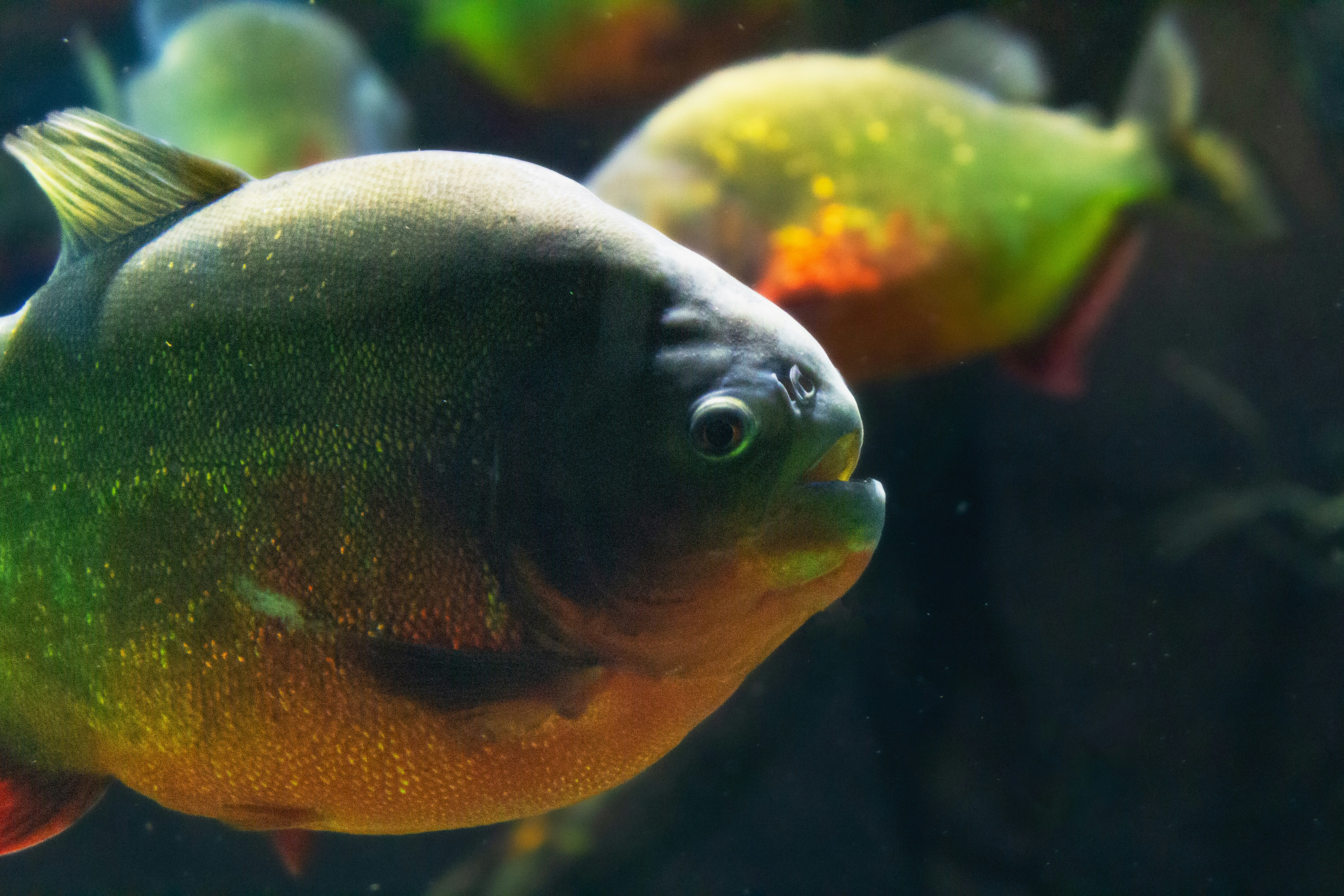
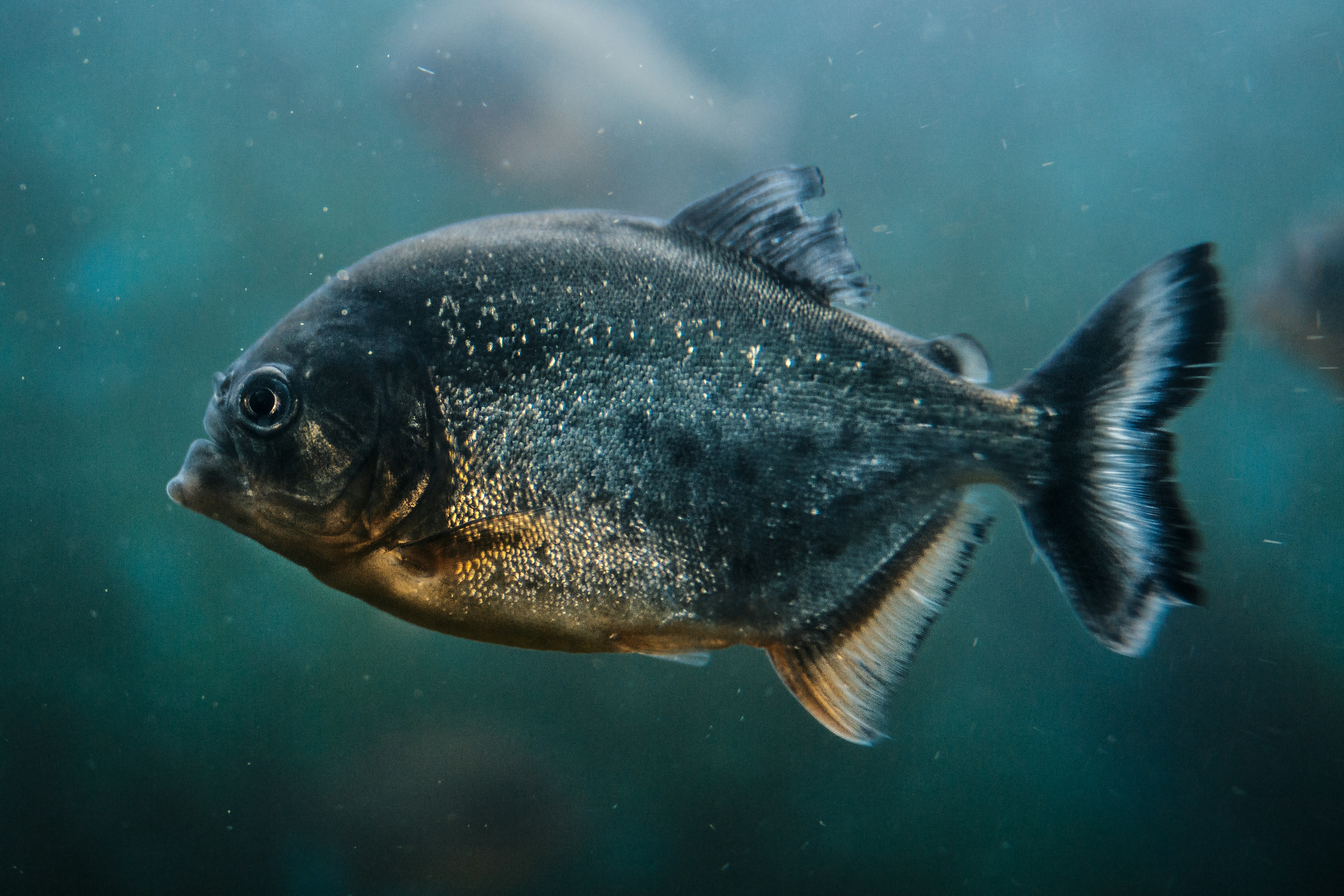
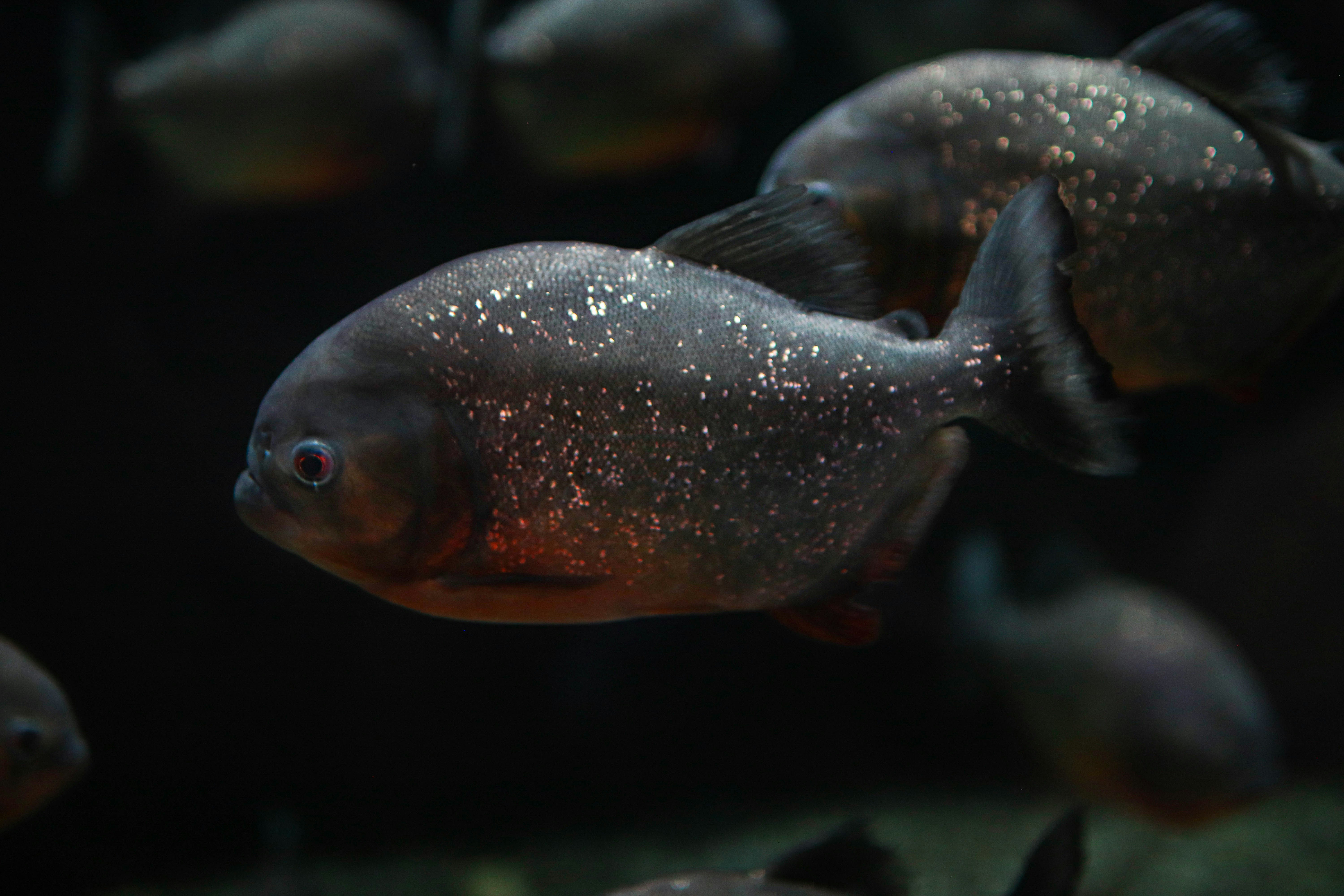
Red-bellied Piranha

Scientific name: Pygocentrus nattereri

Type: Fish Main biome: Rivers and Wetlands Difficulty: Alta

Gregarious fish that lives in schools and requires special facilities due to its behavior and bite strength.

Quick facts

  • Approximate size20–30 cm
  • Average weight500–1,000 g
  • Life expectancy10–15 years (captivity)
  • ActivityDiurnal and crepuscular
Red-bellied Piranha
Red-bellied Piranha
Red-bellied Piranha

Basic information

  • 🏡Habitat: rivers and lagoons of warm waters in the Amazon basin and associated systems.
  • 🍏Diet: fish, invertebrates, carrion, and other remains; opportunistic rather than constant hunter.
  • 👫Sexual dimorphism: slight; better appreciated during breeding season.
  • 🐾Predators: caimans, large predatory fish, and birds; juveniles are very vulnerable.

Life in the wild

How this species lives in its natural environment, with the waters, shelters and resources it needs.

Species overview

The red-bellied piranha is an emblematic fish of South American rivers, often surrounded by myths.

Natural habitat

It occupies mid and lower course rivers, lateral lagoons, and flooded areas with vegetation and submerged logs.

Behavior

It moves in groups, with hierarchies; can show rapid flight behaviors and coordinated attacks on easy prey.

Special features

Its serrated bite is capable of cutting flesh with great effectiveness, requiring precautions in captivity.

Conservation and threats

In many areas it remains abundant; overfishing and river alteration can affect local populations.

Curiosities

Striking details about this species that help better understand its biology and role in aquatic ecosystems.

  • 🌊Its reputation as a "superpredator" is somewhat exaggerated; it usually prefers easy or already wounded prey.
  • It forms schools that offer protection and efficiency when finding food.
  • 🔎Its dentition regenerates throughout life.
  • 🧭It is a powerful and nervous fish in small or poorly designed aquariums.

Welfare profile

Summary of the most critical points if this species is kept in aquariums, ponds or specialized facilities.

Space and facilitiesHigh

It needs very large aquariums with space to swim in groups and adequate refuges.

Water quality and parametersHigh

It requires clean and well-oxygenated water; it is sensitive to waste accumulation.

Handling and stressHigh

Handling must be extremely careful due to its powerful bite; it should never be handled with hands.

Red-bellied Piranha in captivity

General information aimed at professional facilities, public aquariums and educational projects. It does not intend to promote capture or impulsive keeping of aquatic fauna.

⚠️ Before keeping fish like this species, it is essential to review local regulations, ensure adequate facilities and minimize impact on wild populations.

Suitable facilities

It should only be kept in specialized facilities with experienced staff and safety protocols.

Feeding in responsible centers

The diet includes whole fish, meat, and high-quality frozen food.

Handling and welfare

It is essential to keep them in adequate groups and avoid overpopulation that generates aggression.

Ethical message

In education it can be used to talk about predators, schooling behavior, and myths about dangerous animals.

Imagen ampliada