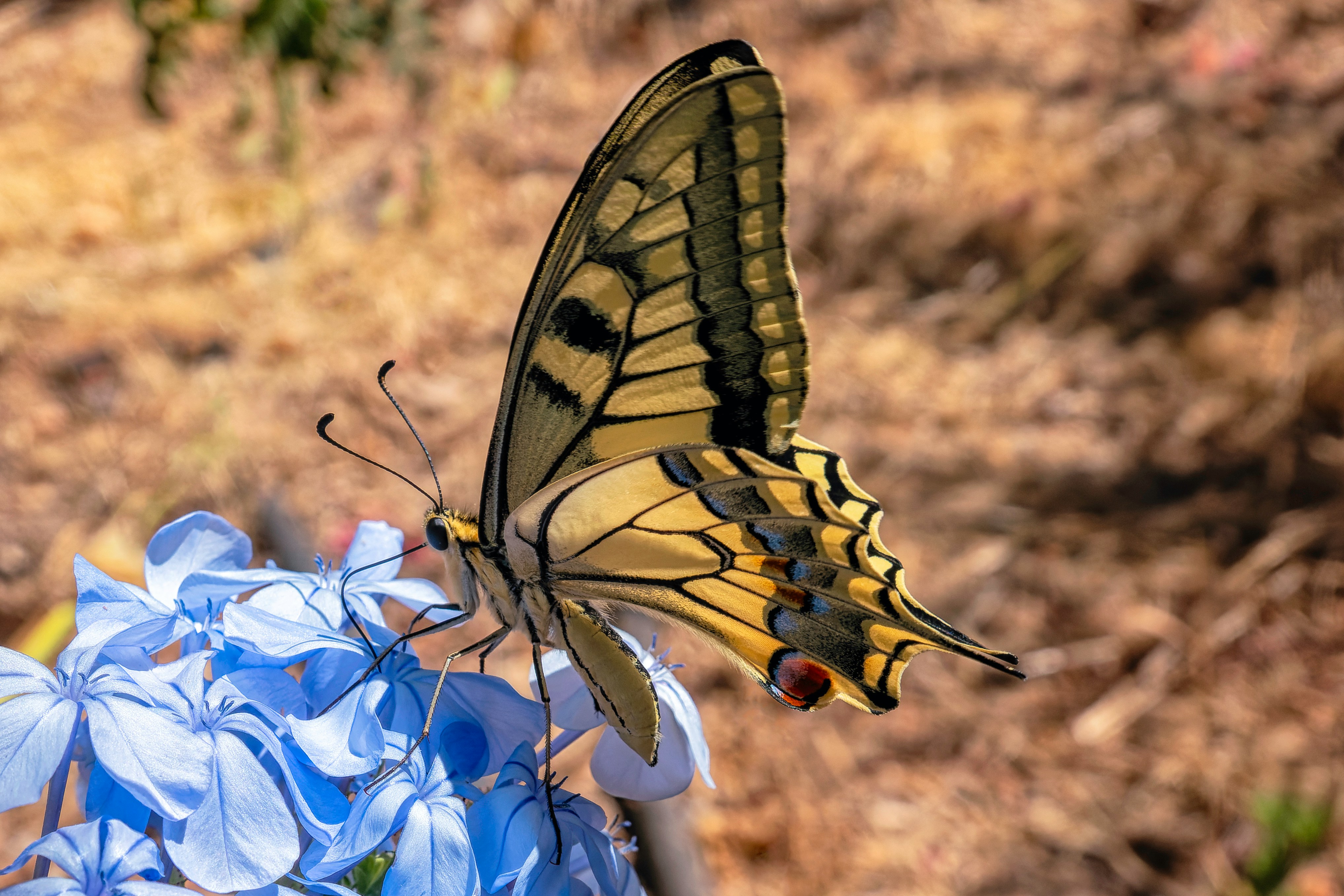
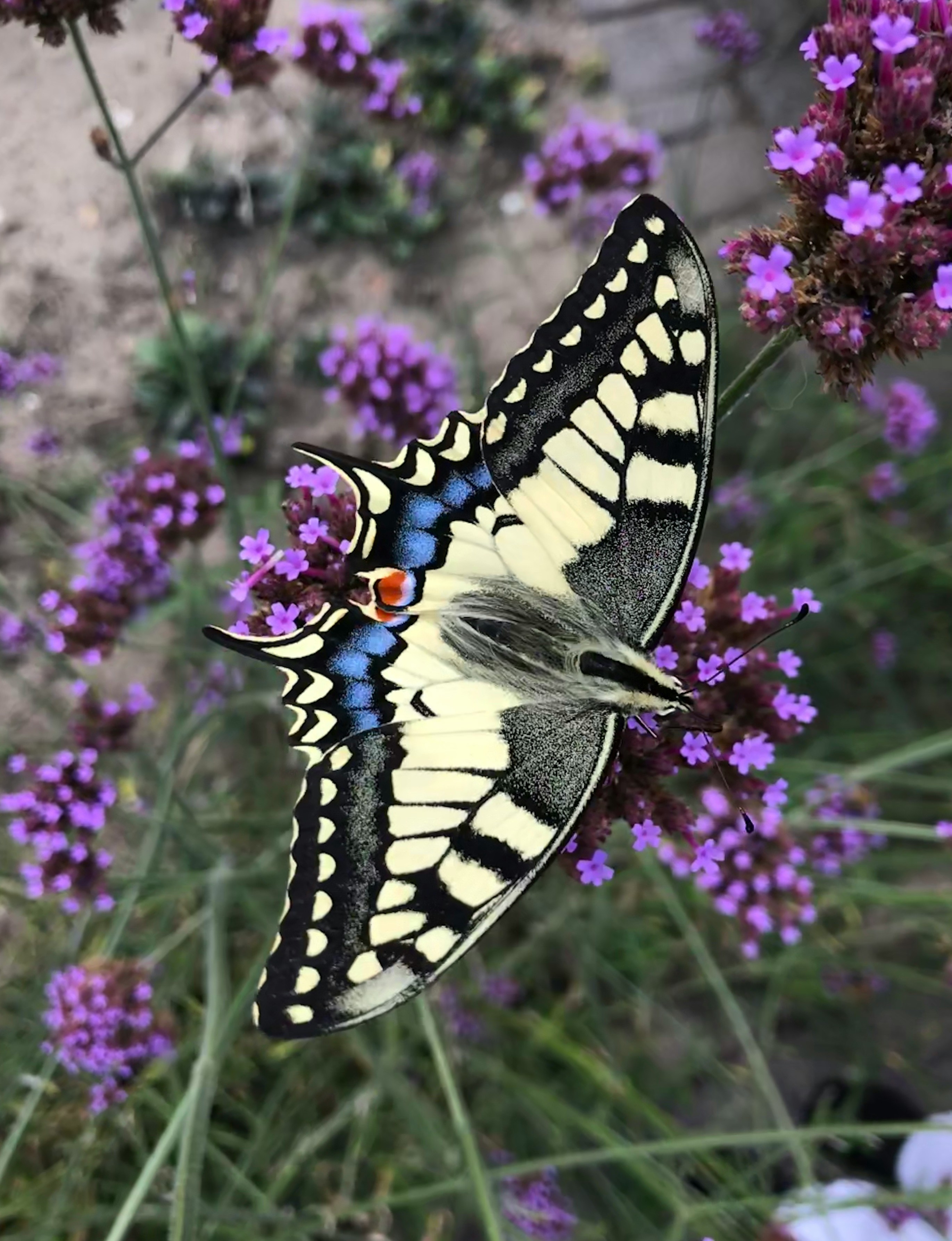
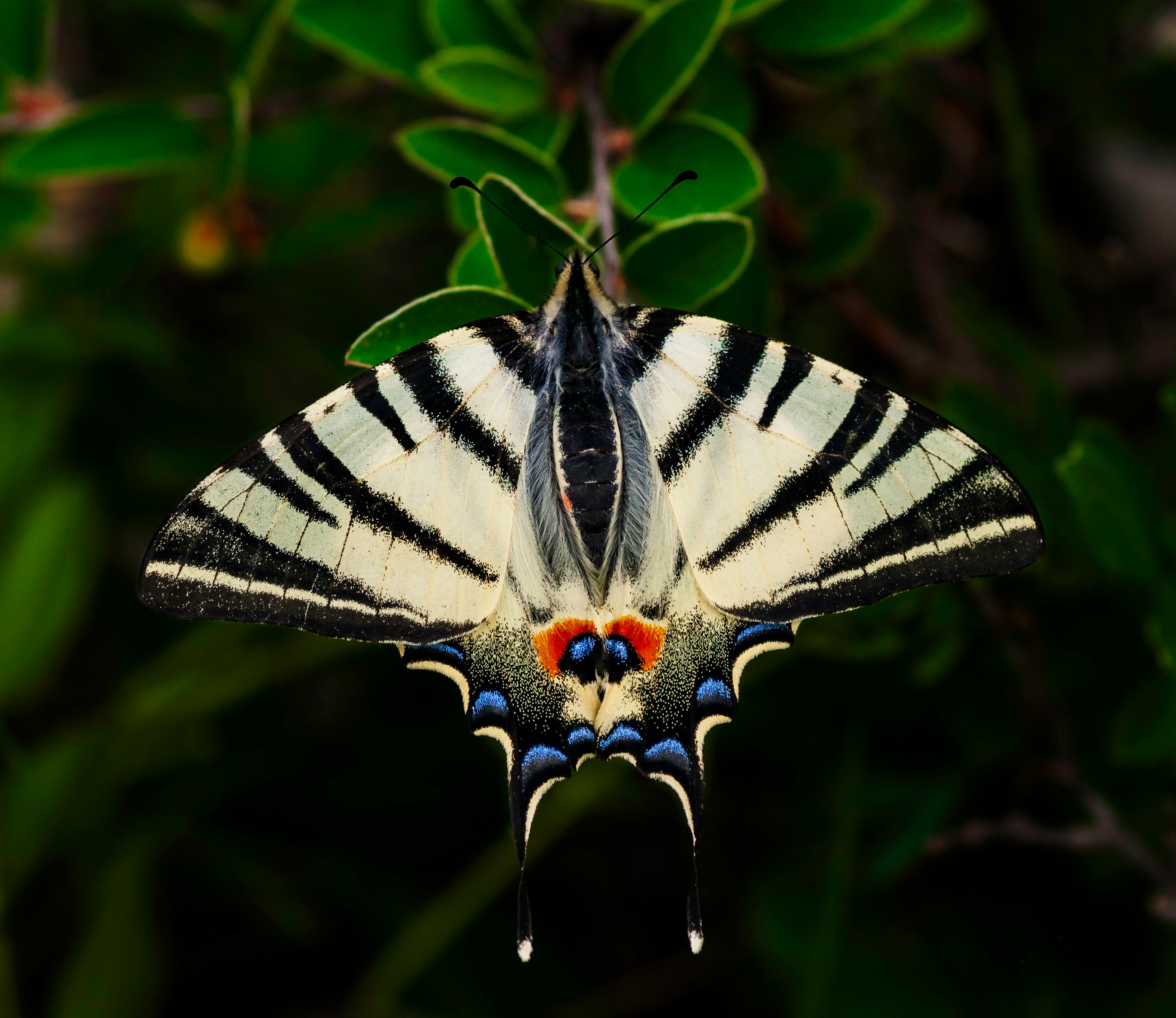
Swallowtail Butterfly

Scientific name: Papilio machaon

Type: Insect Main biome: Mountain Difficulty: Media

Showy pollinator whose caterpillars usually feed on umbelliferous plants like fennel.

Quick facts

  • Wingspan6–8 cm
  • Average weightLess than 1 g
  • Life expectancyFew weeks as adult; several months including chrysalis phase
  • ActivityDiurnal
Swallowtail Butterfly

Basic information

  • 🏡Habitat: grasslands, forest edges, and mountain areas with abundance of flowers and host plants for caterpillars.
  • 🍏Diet: caterpillars consume fennel, wild carrot, and other umbelliferous leaves; adults feed on nectar.
  • 👫Sexual dimorphism: subtle; males and females are very similar in size and pattern.
  • 🐾Predators: insectivorous birds, spiders, and small mammals; the chrysalis suffers from parasites and parasitoids.

Life in the wild

How this species lives in its natural environment, with the climate, shelters and resources it needs.

Species overview

The swallowtail butterfly is an emblem of well-conserved flowery meadows.

Natural habitat

It prefers sunny slopes, grasslands, and fields with umbelliferous plants distributed in mosaic.

Behavior

Adults perform powerful and visible flights, visiting flowers and patrolling open territories.

Special features

Young caterpillars can adopt defensive postures and show odorous organs called osmeteria when they feel threatened.

Conservation and threats

Agricultural intensification and removal of wild flora locally affect its populations.

Curiosities

Striking details about this species that show its biology and ecology in a different way.

  • 🌿Its common name comes from the tails that recall those of swallows.
  • Caterpillars present showy colors that may warn of their unpleasant taste.
  • 🔎It is one of the best-known diurnal butterflies in many regions of Europe.
  • 🧬Chrysalises can spend the winter enduring low temperatures.

Welfare profile

Aspects to consider if this species is kept in captivity in specialized centers.

Space and facilitiesMedium

In captivity only some caterpillars should be raised for educational purposes, always releasing adults at the place of origin.

Environmental conditionsMedium

They need a constant supply of fresh leaves from their host plants.

Handling and stressMedium

Chrysalises must be kept in humidity and temperature conditions similar to outdoors.

Swallowtail Butterfly in captivity

General information aimed at professional facilities and authorized centers.

⚠️ Before keeping insects like this species, it is important to consult local regulations and always consider whether it is really necessary to remove them from their natural environment.

Suitable facilities

School projects can raise a small number of caterpillars with expert guidance.

Feeding in responsible centers

Mass collection of caterpillars or eggs from the same population should be avoided.

Handling and welfare

The best contribution is to conserve and plant native flora that can serve as their habitat.

Ethical message

It is an excellent species to introduce the public to the biology of diurnal butterflies.

Imagen ampliada