Tiger Salamander
Scientific name: Ambystoma tigrinum
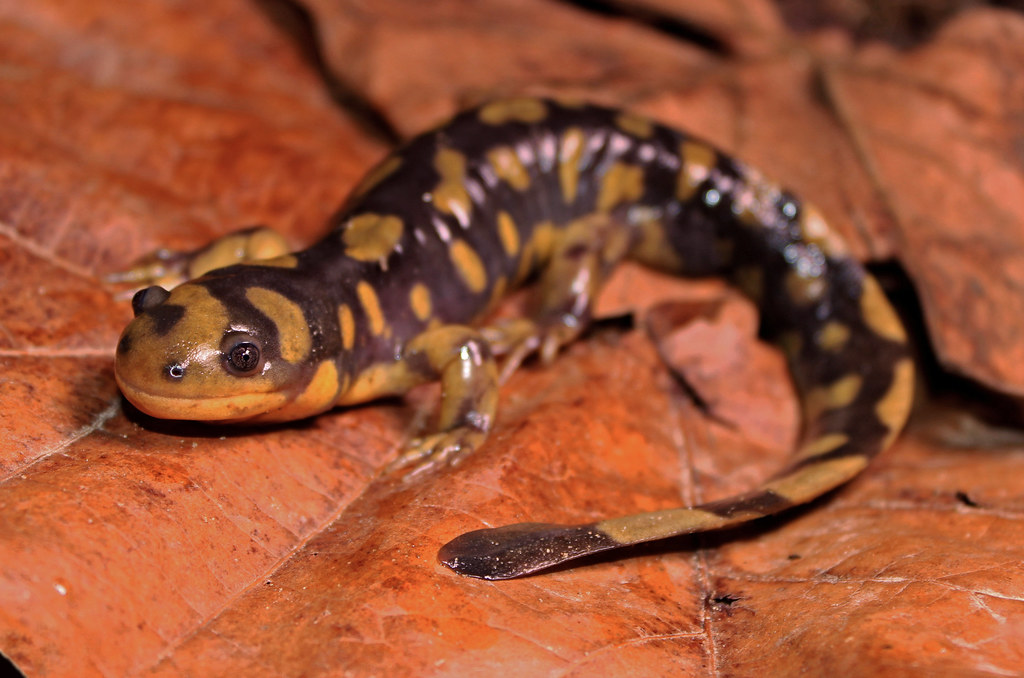
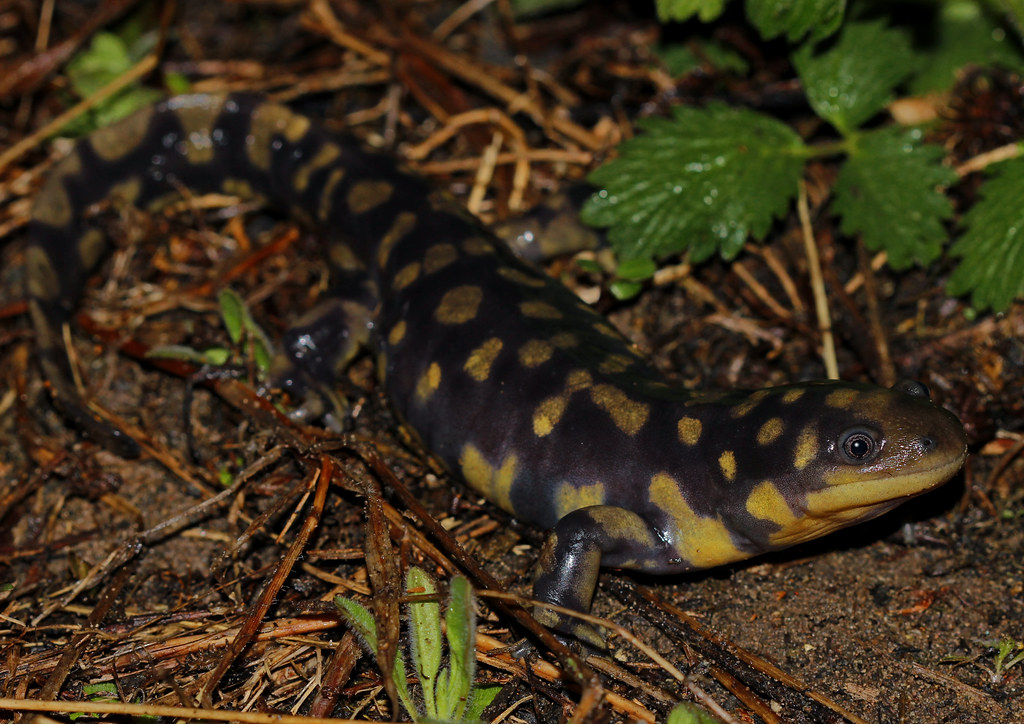
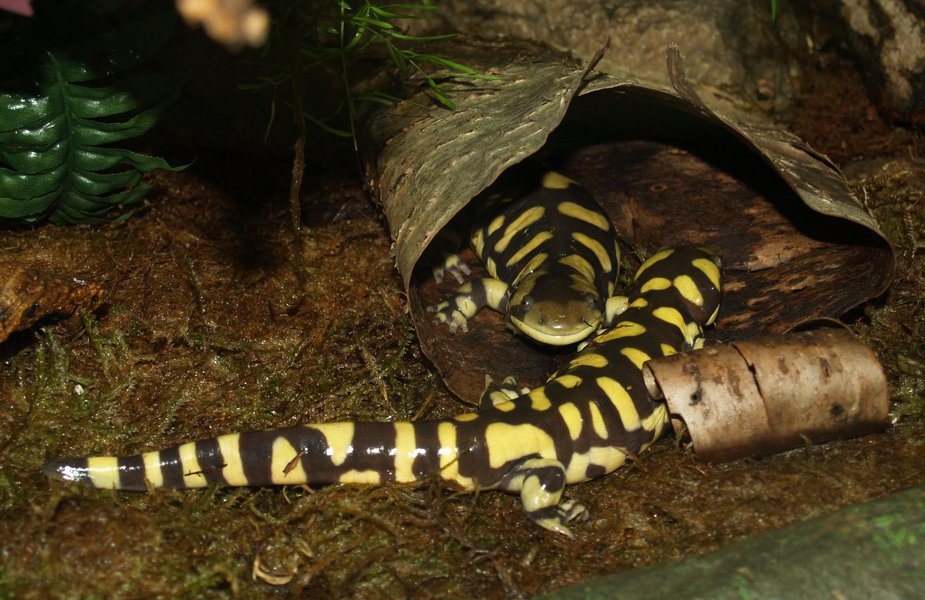
Large salamander with robust body and mottled or striped patterns, native to North America.
Quick facts
- Approximate size15–30 cm
- Average weight50–120 g
- Life expectancy10–15 years
- ActivityNocturnal
Scientific name: Ambystoma tigrinum
Large salamander with robust body and mottled or striped patterns, native to North America.
What this species is like in its natural environment, with the climate, shelters and resources it needs.
The tiger salamander is one of the largest urodeles in North America and an important component of temporary pond ecosystems.
Depends on seasonal ponds for breeding and suitable soils for digging and sheltering the rest of the year.
It is mainly subterranean, emerging on humid nights to feed and migrate to breeding areas.
Its plasticity in larval development and size make it very interesting from a biological standpoint.
Destruction of temporary ponds, pollution and habitat fragmentation threaten some populations.
Striking details about this species that help better understand its biology and role in ecosystems.
Summary of the most critical points if this species is kept in captivity at specialized centers.
In captivity requires terrariums with deep and humid substrate, with access to shelters.
Needs occasional access to appropriate water to observe natural breeding behaviors.
Tolerates excessive heat and dehydration poorly.
General information intended for professional facilities and educational projects. Not intended to encourage capture or improvised keeping of wild amphibians.
Should only be kept by people with prior knowledge about urodeles and their specific needs.
Handling should be minimal, always with clean and moist hands or soft tools.
Can be used in education to explain complex life cycles and the importance of temporary ponds.
This section has an educational purpose. Amphibian conservation involves, above all, protecting ponds, rivers, forests and wetlands, and avoiding irresponsible release of exotic species.