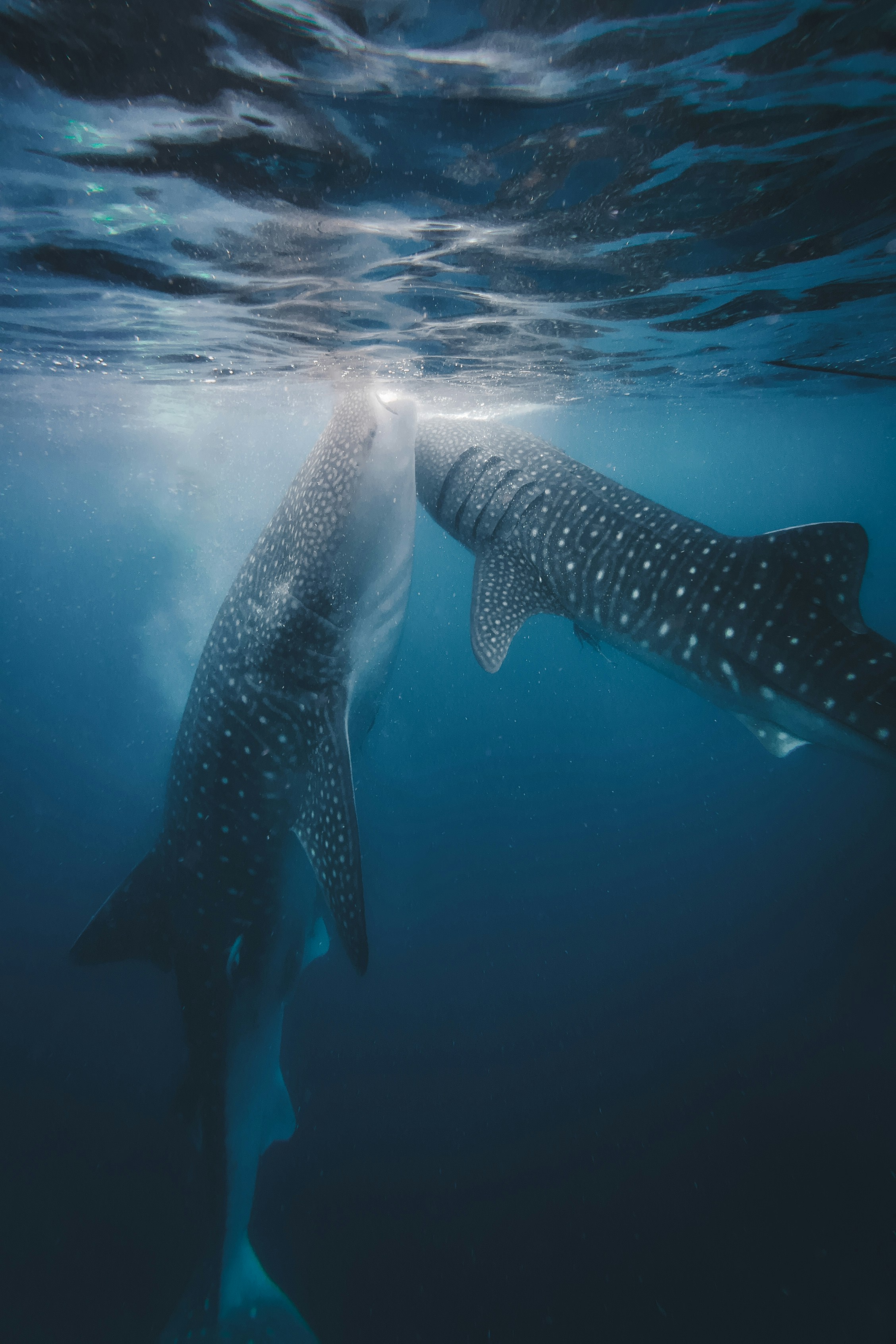
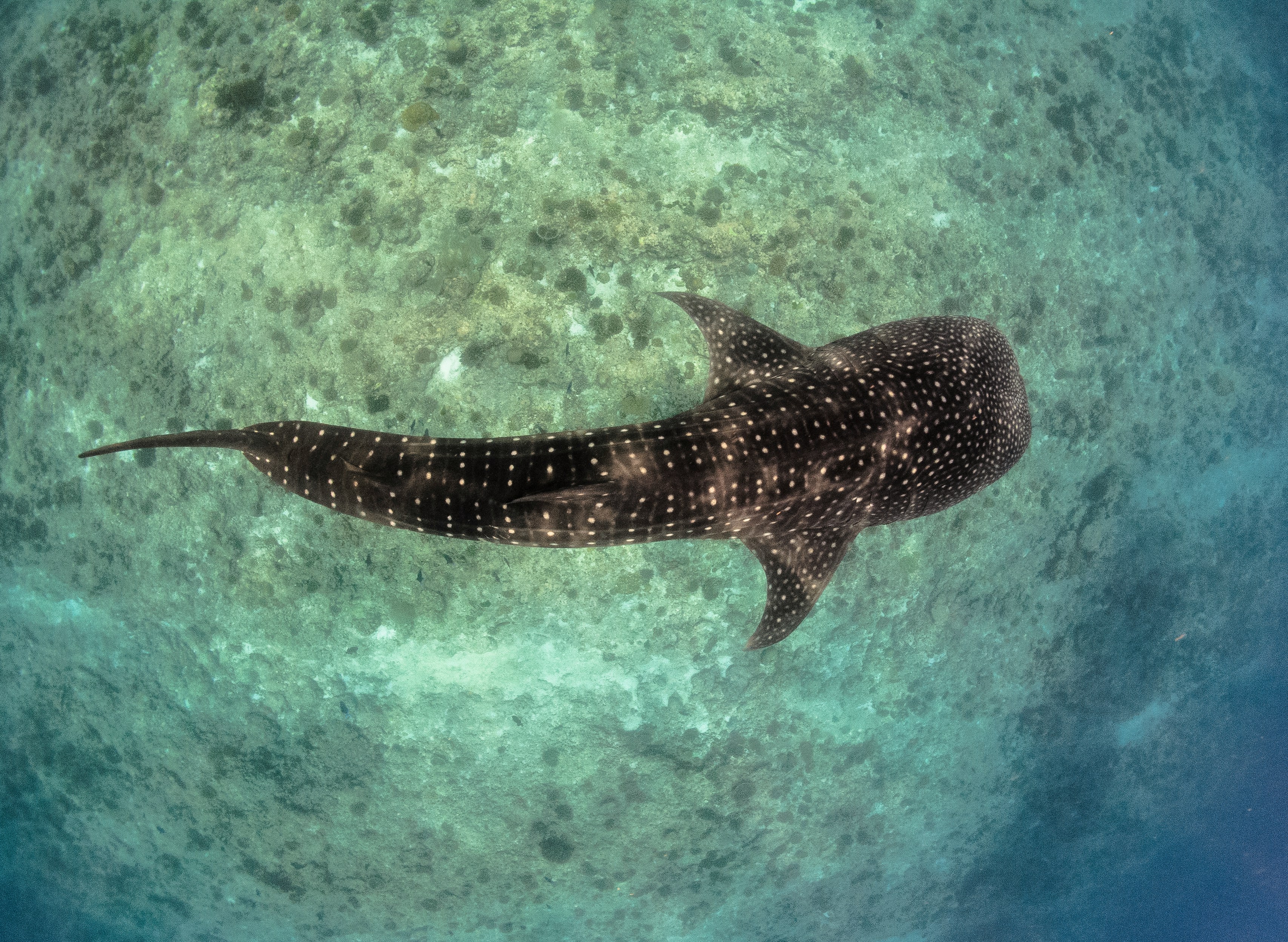
Whale Shark

Scientific name: Rhincodon typus

Type: Fish Main biome: Marine Environment Difficulty: Alta

Peaceful marine giant that undertakes long migrations and lives in open seas and productive coastal areas.

Quick facts

  • Approximate size8–12 m (some larger)
  • Average weight10–20 tons
  • Life expectancy70–100 years (estimated)
  • ActivityMainly diurnal
Whale Shark
Whale Shark
Whale Shark

Basic information

  • 🏡Habitat: tropical and subtropical seas, often in areas of high productivity where plankton abounds.
  • 🍏Diet: zooplankton, small fish, and fish eggs that it filters through its gills.
  • 👫Sexual dimorphism: males with visible pterygopodia; females larger in size.
  • 🐾Predators: practically only orcas and very large sharks could attack juveniles; adults have almost no predators.

Life in the wild

How this species lives in its natural environment, with the waters, shelters and resources it needs.

Species overview

The whale shark is an icon of tropical oceans and the challenges of conserving marine megafauna.

Natural habitat

It moves between coasts, oceanic islands, and open sea following concentrations of plankton and schools of small fish.

Behavior

It swims slowly near the surface or in somewhat deeper waters, filtering large volumes of water.

Special features

Its colossal size contrasts with its diet based on tiny prey and its generally peaceful behavior.

Conservation and threats

It is listed as a threatened species; accidental fishing, maritime traffic, and poorly managed tourism are important risks.

Curiosities

Striking details about this species that help better understand its biology and role in aquatic ecosystems.

  • 🌊Despite its size, it feeds on very small particles filtered from the water.
  • It is one of the great attractions of responsible marine ecotourism.
  • 🔎Its spot patterns are unique and are used to identify individuals.
  • 🧭Some giant aquariums have kept specimens, but their long-term welfare is highly debated.

Welfare profile

Summary of the most critical points if this species is kept in aquariums, ponds or specialized facilities.

Space and facilitiesHigh

It is not suitable for permanent captivity. It requires enormous volumes of water and massive filtration systems.

Water quality and parametersHigh

It needs open waters with constant movement and stable marine parameters. Closed systems cannot replicate its needs.

Handling and stressHigh

Confinement generates severe stress and abnormal behaviors. Most specimens in captivity do not survive long.

Whale Shark in captivity

General information aimed at professional facilities, public aquariums and educational projects. It does not intend to promote capture or impulsive keeping of aquatic fauna.

⚠️ Before keeping fish like this species, it is essential to review local regulations, ensure adequate facilities and minimize impact on wild populations.

Suitable facilities

Only some very large public aquariums have attempted to keep it temporarily, with generally negative results.

Feeding in responsible centers

It requires large amounts of quality fresh marine food, which is logistically very complex.

Handling and welfare

The best way to know it is through observation in its natural habitat through responsible diving or audiovisual material.

Ethical message

It is essential to educate about conservation of marine megafauna, responsible ecotourism, and protection of threatened species.

Imagen ampliada