Common Frog
Scientific name: Rana temporaria
Temperate climate frog closely linked to ponds, pools and calm streams.
Quick facts
- Approximate size 6–9 cm
- Average weight 20–40 g
- Life expectancy 6–8 years
- Activity Crepuscular / nocturnal

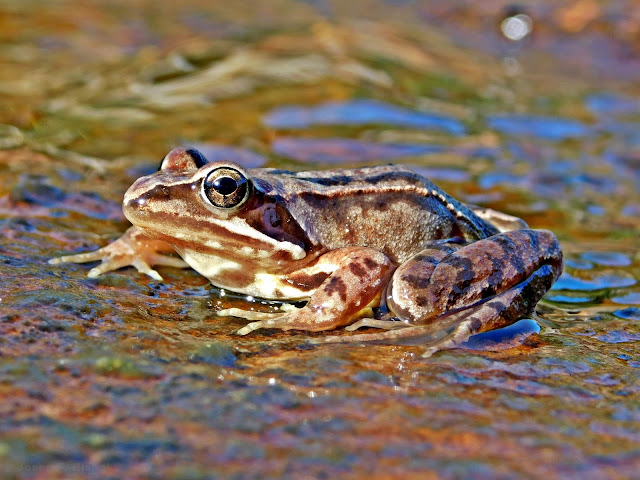
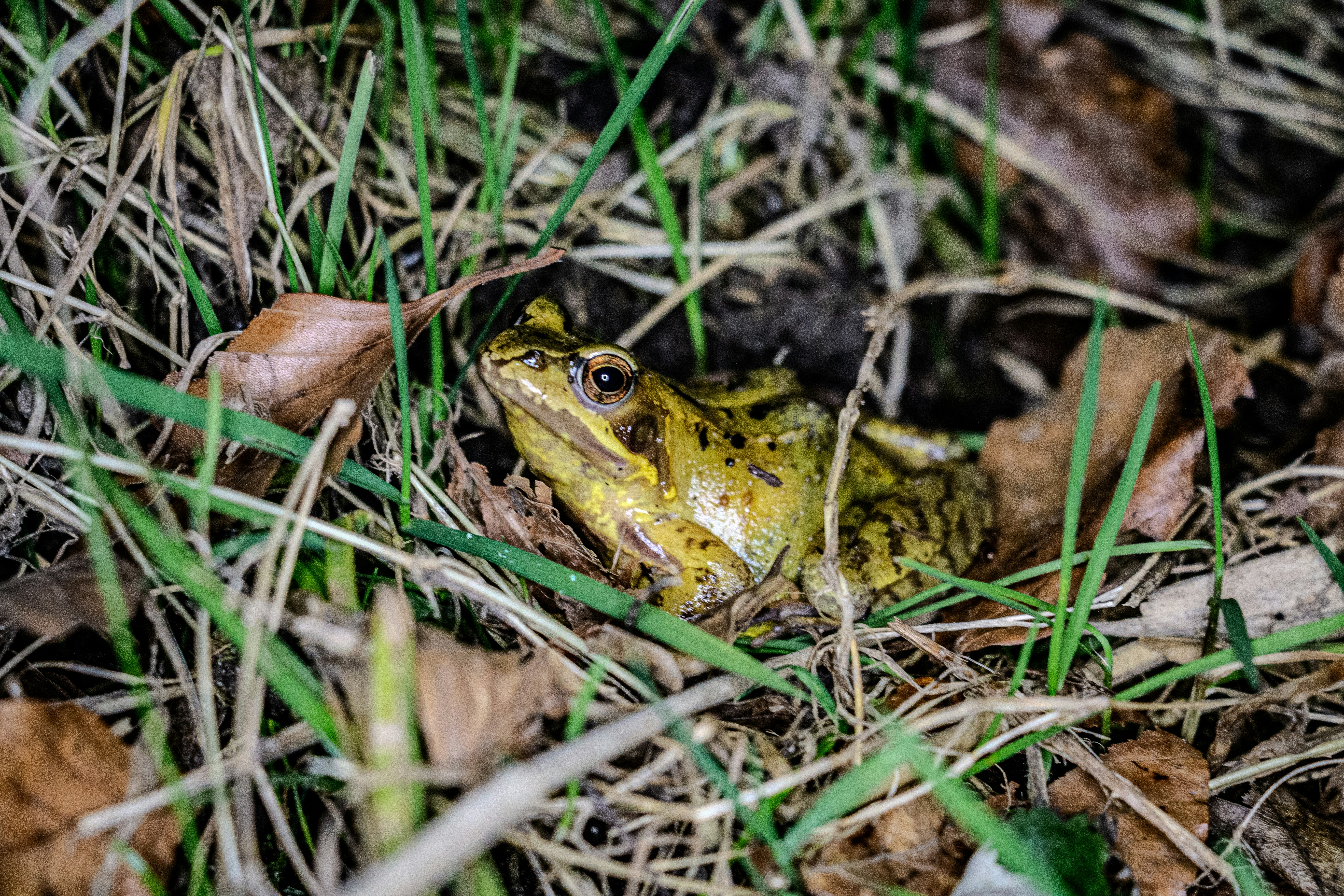
Scientific name: Rana temporaria
Temperate climate frog closely linked to ponds, pools and calm streams.
What this species is like in its natural environment, with the climate, shelters and resources it needs.
The common frog is one of the most visible amphibians in Europe, particularly in spring during mating season.
Needs calm bodies of water for breeding and humid terrestrial areas with shelters for the rest of the year.
Spends much time near water, but also ventures into meadows and forests; jumps quickly at any threat.
Its life cycle well illustrates the typical amphibian metamorphosis, from fully aquatic tadpole to terrestrial adult.
Pond loss, pollution and some emerging diseases have reduced populations in certain regions.
Striking details about this species that help better understand its biology and role in ecosystems.
Summary of the most critical points if this species is kept in captivity at specialized centers.
In captivity requires facilities with well-defined aquatic and terrestrial areas.
Water quality and terrarium ventilation are key to avoiding skin problems.
Handling should be gentle and minimal, as its skin is very sensitive to chemicals on hands.
General information intended for professional facilities and educational projects. Not intended to encourage capture or improvised keeping of wild amphibians.
Captive maintenance is usually linked to educational projects or breeding to strengthen local populations.
It is useful to provide terrestrial shelters and areas with aquatic vegetation where it can hide.
Priority should always be wetland conservation and control of threats such as chytridiomycosis.
This section has an educational purpose. Amphibian conservation involves, above all, protecting ponds, rivers, forests and wetlands, and avoiding irresponsible release of exotic species.