Emerald Tree Boa

Scientific name: Corallus caninus

Type: Reptile Main biome: Tropical Jungle Difficulty: Alta

Nocturnal boa that rests coiled on branches during the day and hunts at height at night.

Quick facts

  • Approximate size1.5–2 m
  • Average weight1–3 kg
  • Life expectancy15–20 years (captivity)
  • ActivityNocturnal, mainly arboreal
Emerald Tree Boa
Emerald Tree Boa
Emerald Tree Boa

Basic information

  • 🏡Habitat: lives in humid tropical rainforests, using thick branches over waterways or forest clearings.
  • 🍏Diet: predator of small mammals, birds, and other vertebrates that it captures from its perches.
  • 👫Sexual dimorphism: females are usually larger and more robust than males; the difference is most noticeable in adult specimens.
  • 🐾Predators: large birds of prey, carnivorous mammals, and humans; juveniles are vulnerable to multiple predators.

Life in the wild

How this species lives in its natural environment, with the climate, shelters and resources it needs.

Species overview

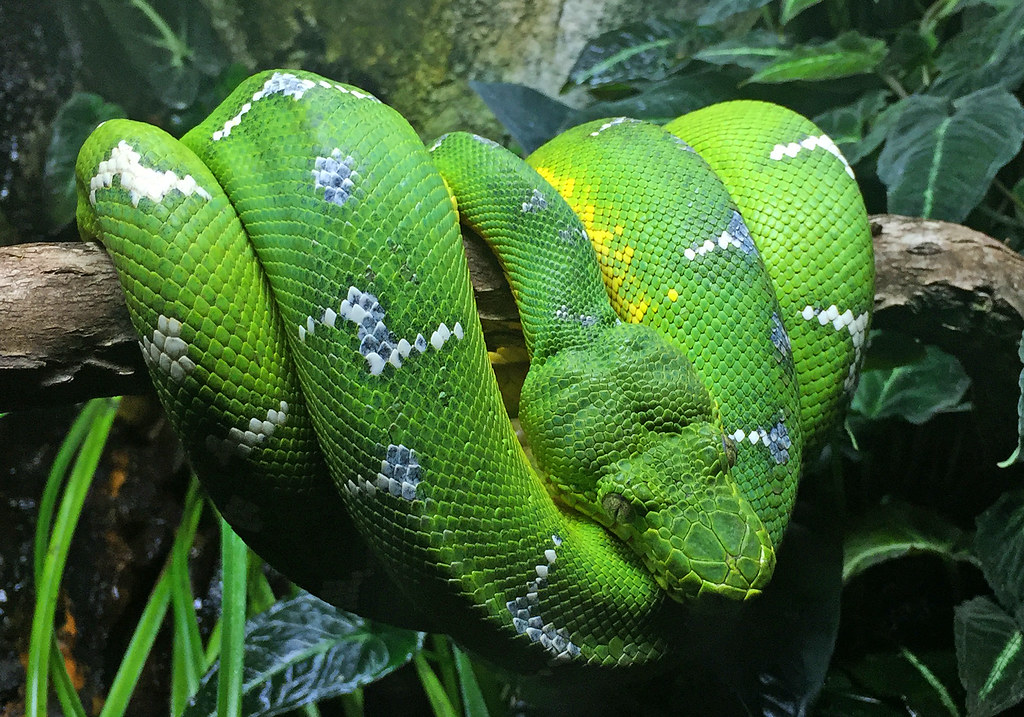
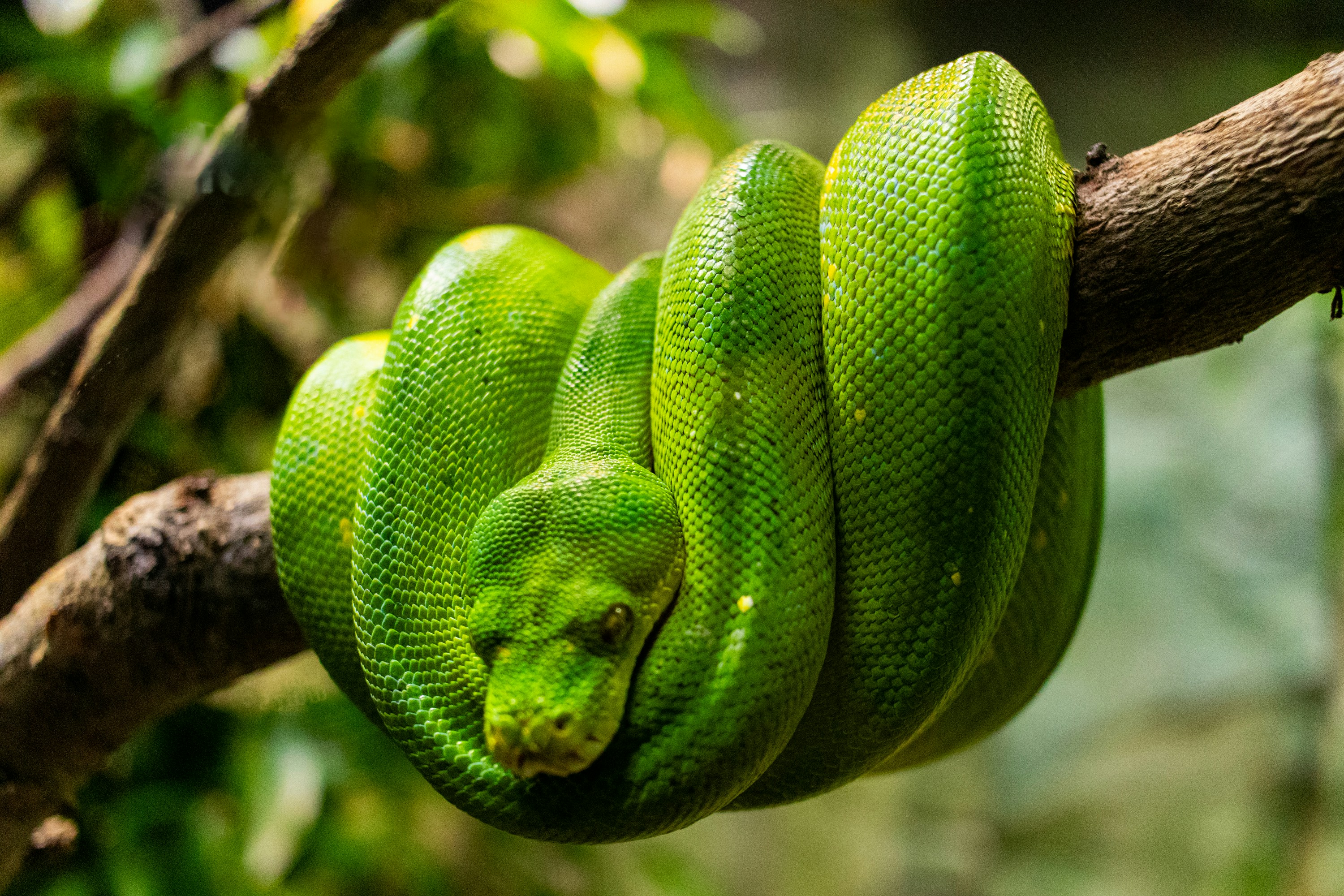
The emerald tree boa is an iconic inhabitant of the Amazon rainforest, easily recognizable by its coiled posture on branches.

Natural habitat

It prefers very humid forests with sturdy branches located above waterways or forest clearings, where it can stay elevated and discreet.

Behavior

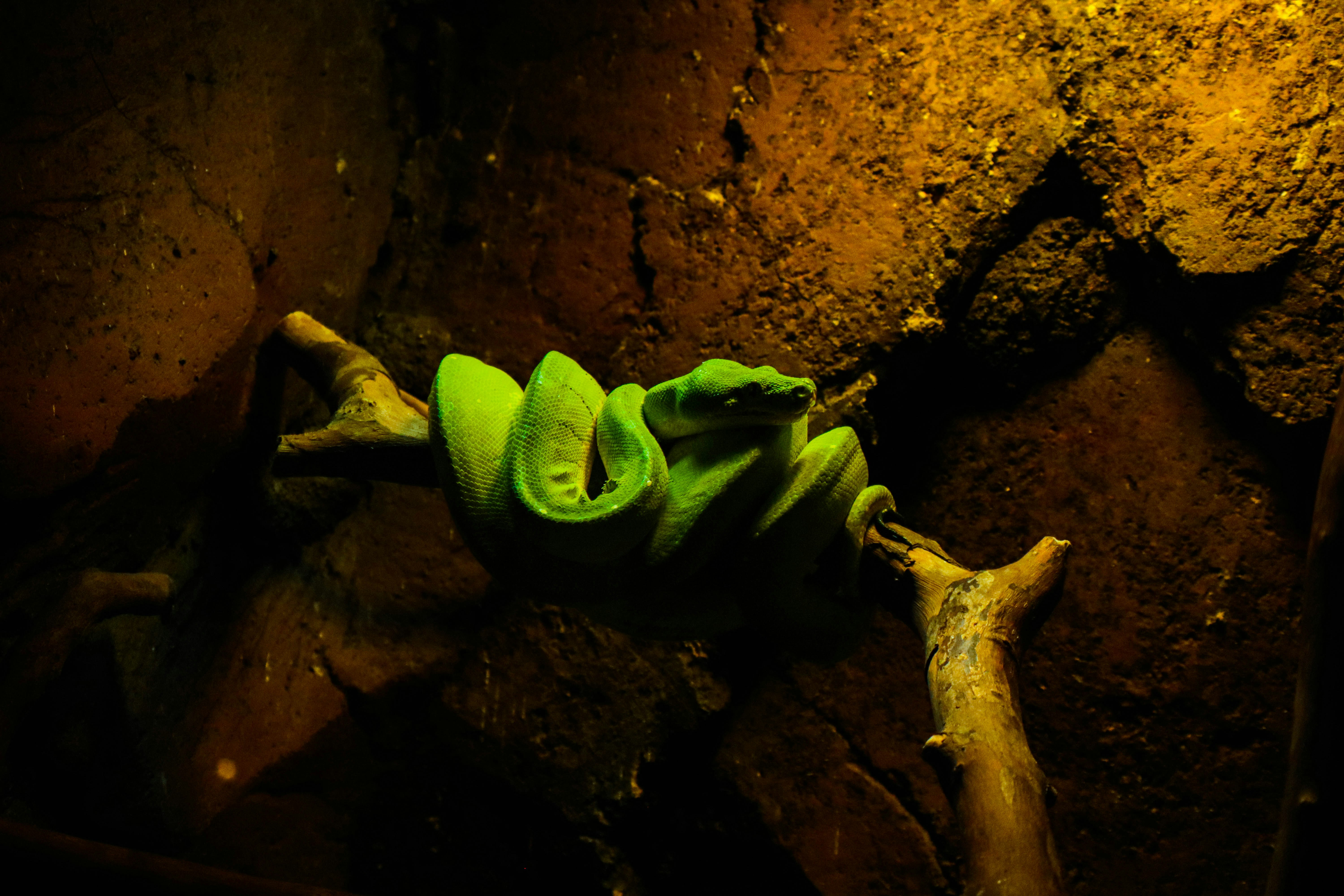
It is mainly nocturnal. During the day it rests coiled, while at nightfall it adopts hunting positions awaiting passing prey.

Special features

Its heat-sensing pits allow it to detect the body heat of mammals and birds. The contrast between the green body and white markings breaks up its silhouette among the vegetation.

Conservation and threats

Forest loss and unregulated trade are threats to some populations. Responsible breeding can reduce pressure on wild specimens.

Curiosities

Striking details about this species that show its biology and ecology in a different way.

  • 🌍It usually rests coiled on a branch, forming a characteristic pile of loops.
  • It has heat-sensing pits to detect the warmth of prey.
  • 🔎It is a demanding species in terms of temperature, humidity, and ventilation.
  • 🧠In the wild, it helps control populations of rodents and small birds.

Welfare profile

Aspects to consider if this species is kept in captivity in specialized centers.

Enclosures and spaceHigh

Needs tall enclosures with strong branches placed at different heights, allowing it to adopt its typical posture on secure perches.

Light, temperature, and environmentHigh

Requires high ambient humidity combined with good ventilation, avoiding both desiccation and constant saturation.

Handling and stressHigh

Direct handling should be minimal; it stresses easily and can defend itself with powerful bites.

Emerald Tree Boa in captivity

General information aimed at professional facilities and authorized centers.

⚠️ The capture and trade of reptiles like this species are regulated in many countries. It is essential to verify the legal origin of animals and prioritize responsible breeding programs and habitat conservation.

Suitable enclosures

In captivity, a humid forest terrarium with numerous horizontal branches and visual shelters is recommended.

Feeding in responsible centers

The diet is based on appropriately sized warm-blooded prey, offered with tongs to avoid associating hands with food.

Handling and welfare

Health checks and enclosure cleaning should be planned to reduce the need for direct handling, using movable perches.

Ethical message

Ethically and technically, it is considered a species suitable only for experienced keepers capable of guaranteeing environmental stability.

Imagen ampliada