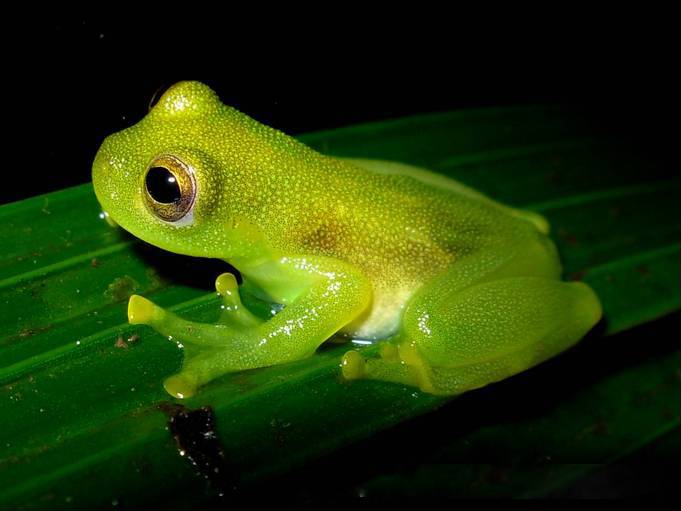
Glass Frog

Scientific name: Hyalinobatrachium valerioi

Type: Amphibian Main biome: Temperate Forest Difficulty: Alta

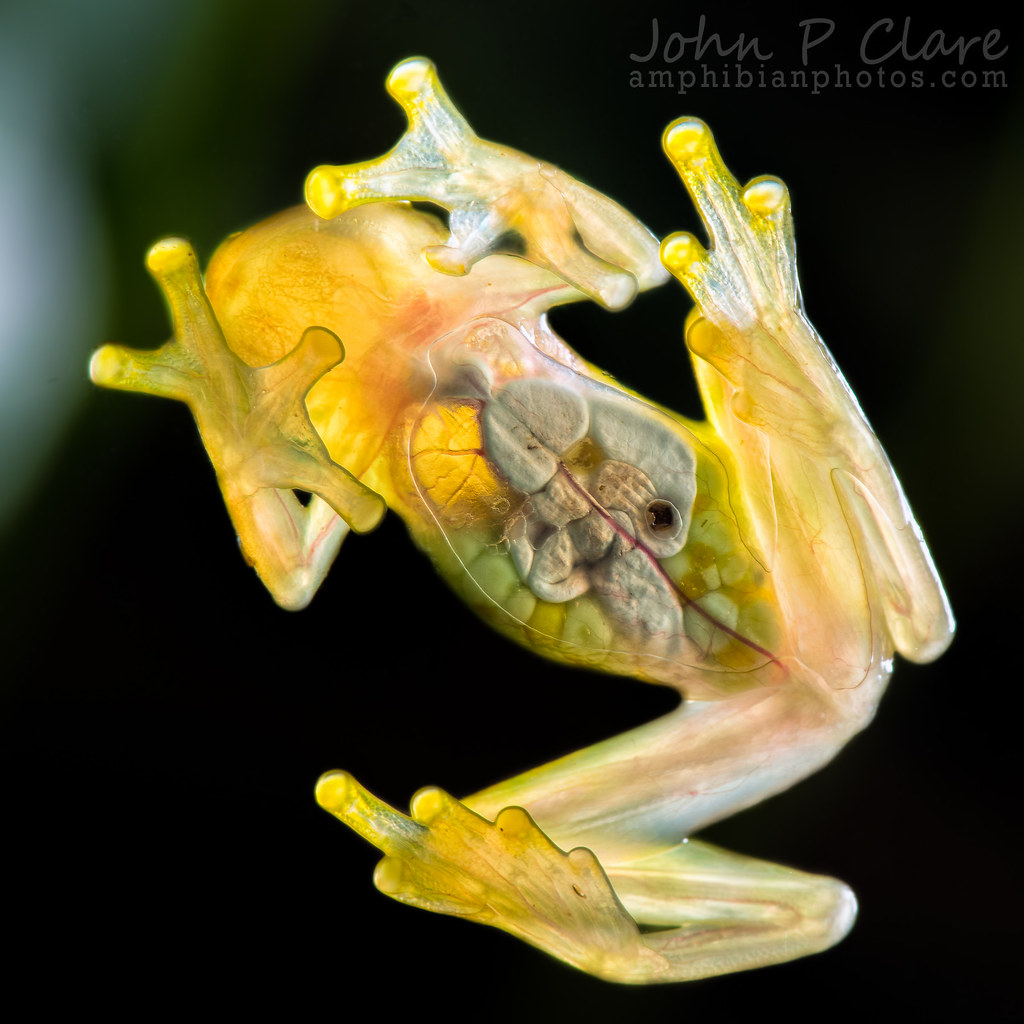
Small tree frogs with nearly transparent ventral skin that reveals their internal organs.

Quick facts

  • Approximate size 2–3 cm
  • Average weight 2–5 g
  • Life expectancy 10–14 years (captivity)
  • Activity Nocturnal
Glass Frog
Glass Frog
Glass Frog

Basic information

  • 🏡 Home: humid and cloud forests near rivers and mountain streams in Central and South America.
  • 🍏 Food: small insects and other tiny invertebrates.
  • 👫 Sexual dimorphism: males slightly smaller, usually call from leaves above water.
  • 🐾 Predators: predatory insects, spiders, snakes and fish; eggs are very vulnerable.

Life in the wild

What this species is like in its natural environment, with the climate, shelters and resources it needs.

Species overview

Glass frogs represent one of the most delicate and visually unique amphibian groups in neotropical forests.

Natural habitat

Require cloud forests and riverbanks with dense vegetation, where water is clean and humidity is high.

Behavior

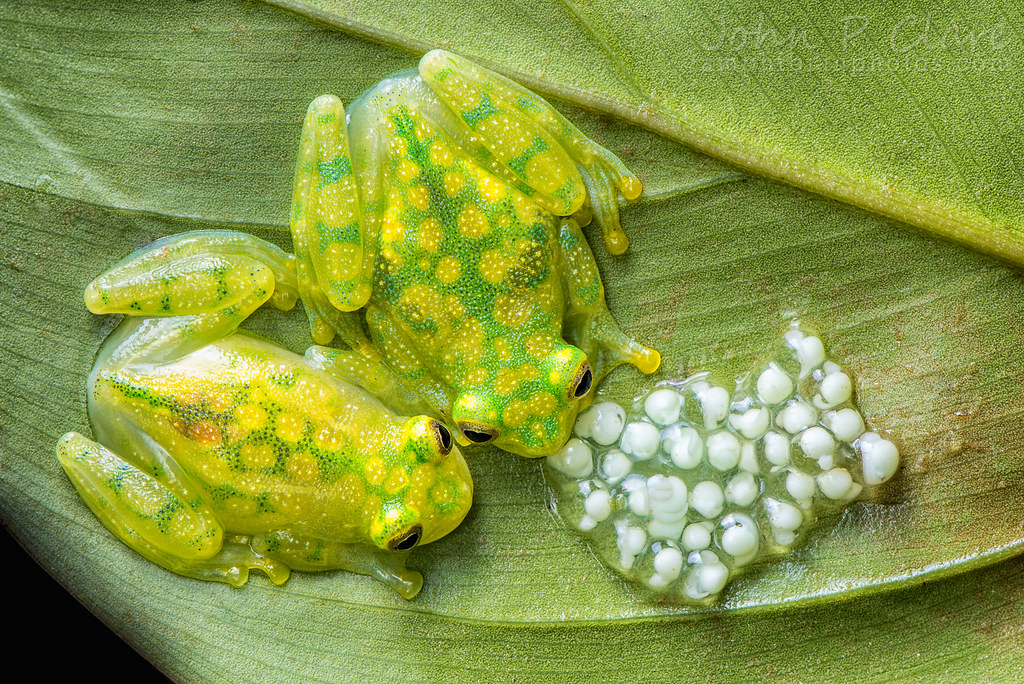
They are nocturnal, perch on thin leaves and branches above water, and males may show parental care.

Special traits

Their ventral transparency has fascinated both scientists and the general public, symbolizing the fragility of amphibians.

Conservation and threats

Very sensitive to riverbank degradation, pollution and climate change in mountain areas.

Curiosities

Striking details about this species that help better understand its biology and role in ecosystems.

  • 🌧️ Their belly skin is so transparent that heart, liver and other organs can be seen.
  • Males often care for egg clutches attached to the underside of leaves above water.
  • 🔎 Their presence is associated with well-preserved forests and riverbanks.
  • 🧪 Many glass frog species are still under study and new ones are regularly described.

Welfare profile

Summary of the most critical points if this species is kept in captivity at specialized centers.

Facilities and space Critical

In captivity they are extremely difficult to maintain; require very precise environmental conditions.

Water, light and microclimate Critical

Any variation in humidity, temperature or water quality can be fatal.

Handling and stress Very delicate

Not suitable for home terrariums or frequent exhibitions.

Glass Frog in captivity

General information intended for professional facilities and educational projects. Not intended to encourage capture or improvised keeping of wild amphibians.

⚠️ Amphibians are particularly vulnerable to pollution, emerging diseases and improper handling. Before keeping species like this, it is essential to review local regulations and seek qualified advice.

Suitable facilities

Maintenance should be limited to scientific institutions with clear research and conservation objectives.

Feeding in responsible centers

  • Enclosures need to carefully control microclimate and misting water quality.
  • Tiny prey such as springtails and fruit flies.
  • Careful calcium and vitamin supplementation.

Handling and welfare

Public exhibition, if any, is usually done through cameras and systems that minimize disturbance.

Ethical message

In education they serve as an emblem of the vulnerability of mountain amphibians to environmental change.

Imagen ampliada