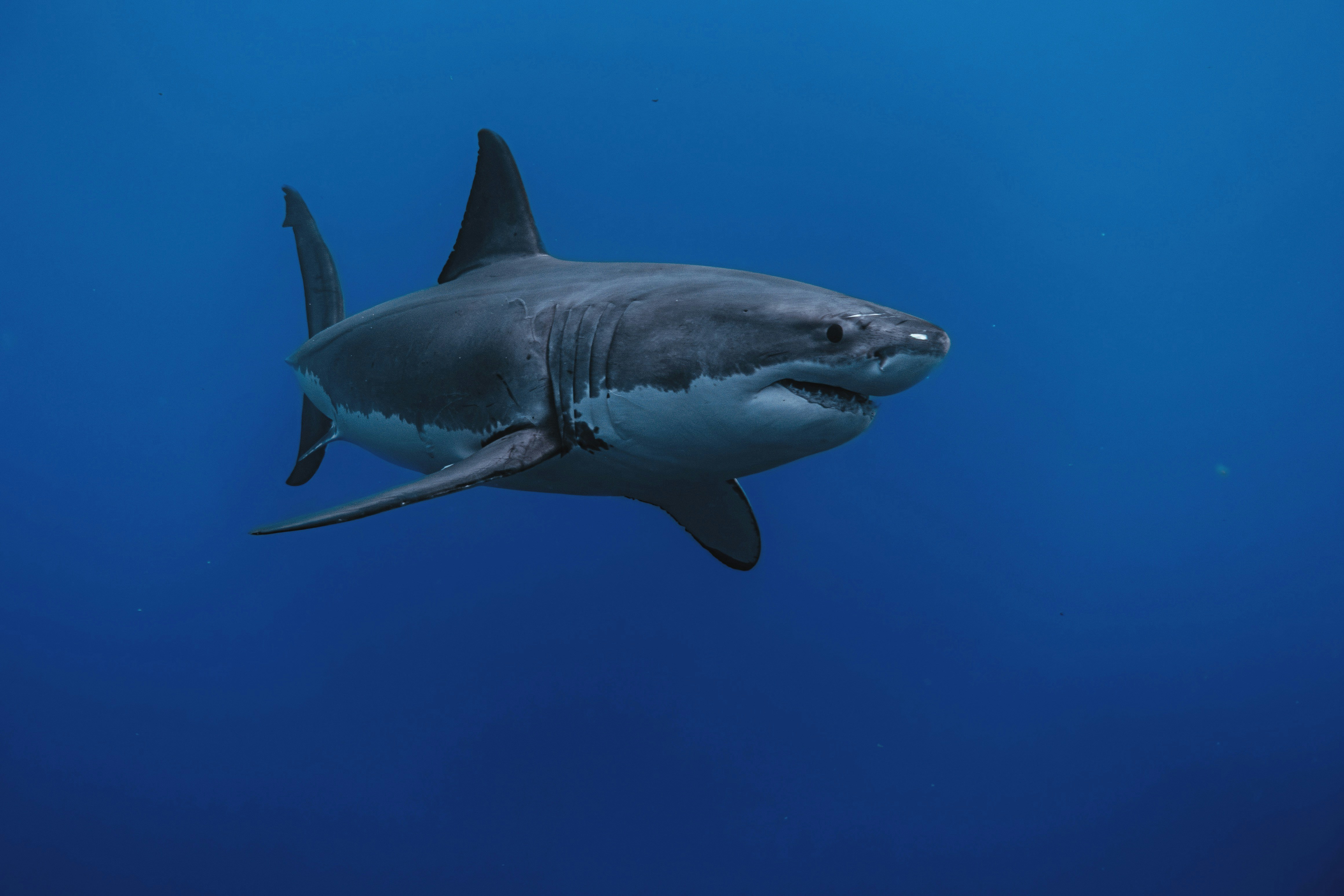
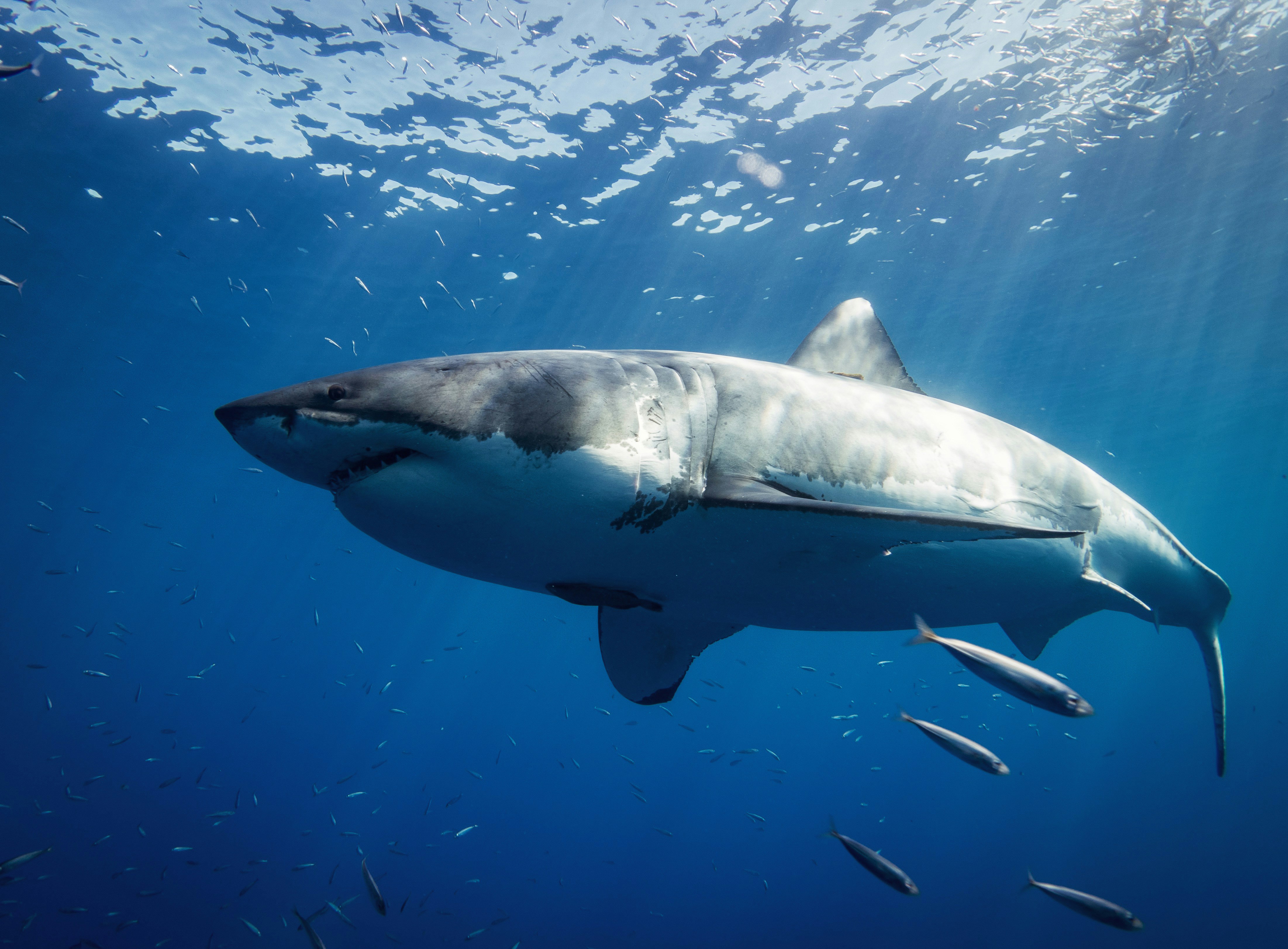
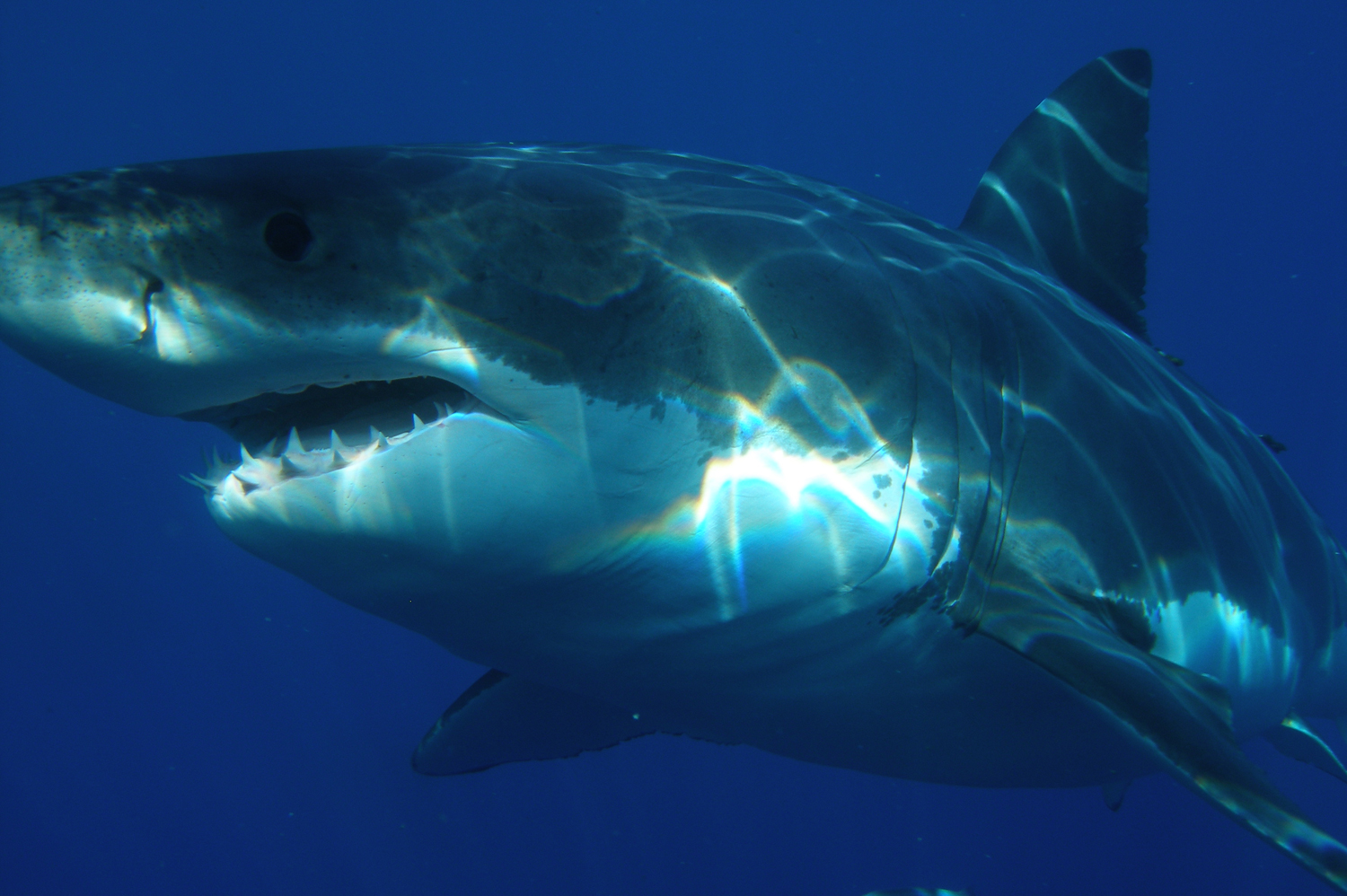
Great White Shark

Scientific name: Carcharodon carcharias

Type: Fish Main biome: Marine Environment Difficulty: Alta

Marine giant that travels enormous distances and is not suitable for long-term captivity.

Quick facts

  • Approximate size4–6 m (some individuals larger)
  • Average weight700–1,800 kg
  • Life expectancy30–40 years (estimated)
  • ActivityMainly diurnal and crepuscular
Great White Shark
Great White Shark
Great White Shark

Basic information

  • 🏡Habitat: coasts and open sea of temperate waters, especially where there are pinniped colonies.
  • 🍏Diet: large fish, other sharks, rays, and marine mammals such as seals and sea lions.
  • 👫Sexual dimorphism: females usually reach larger sizes than males.
  • 🐾Predators: practically lacks natural predators as an adult; orcas and humans can be occasional threats.

Life in the wild

How this species lives in its natural environment, with the waters, shelters and resources it needs.

Species overview

The great white shark is an icon of large marine predators and the need to change our view of sharks.

Natural habitat

It prefers temperate waters with good productivity, especially near islands and continental shelves.

Behavior

It is a solitary or small group predator, with exploratory and often cautious behavior.

Special features

It has highly developed senses, including detection of electric fields and extremely fine sense of smell.

Conservation and threats

It is protected in many regions; overfishing of prey, accidental catches, and habitat degradation threaten it.

Curiosities

Striking details about this species that help better understand its biology and role in aquatic ecosystems.

  • 🌊It is an important regulator of marine food chains.
  • Most attacks on humans are identification errors, not targeted hunting.
  • 🔎It travels thousands of kilometers in long migrations between feeding and breeding areas.
  • 🧭Attempts to keep it in aquariums have been very limited and problematic.

Welfare profile

Summary of the most critical points if this species is kept in aquariums, ponds or specialized facilities.

Space and facilitiesHigh

It is not suitable for permanent captivity. It requires enormous volumes of water and massive filtration systems.

Water quality and parametersHigh

It needs open waters with constant movement and stable marine parameters. Closed systems cannot replicate its needs.

Handling and stressHigh

Confinement generates severe stress and abnormal behaviors. Most specimens in captivity do not survive long.

Great White Shark in captivity

General information aimed at professional facilities, public aquariums and educational projects. It does not intend to promote capture or impulsive keeping of aquatic fauna.

⚠️ Before keeping fish like this species, it is essential to review local regulations, ensure adequate facilities and minimize impact on wild populations.

Suitable facilities

Only some very large public aquariums have attempted to keep it temporarily, with generally negative results.

Feeding in responsible centers

It requires large amounts of quality fresh marine food, which is logistically very complex.

Handling and welfare

The best way to know it is through observation in its natural habitat through responsible diving or audiovisual material.

Ethical message

It is essential to educate about the importance of sharks in marine ecosystems and combat destructive fishing.

Imagen ampliada