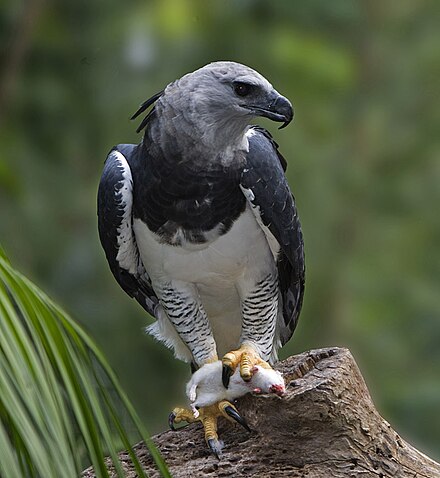
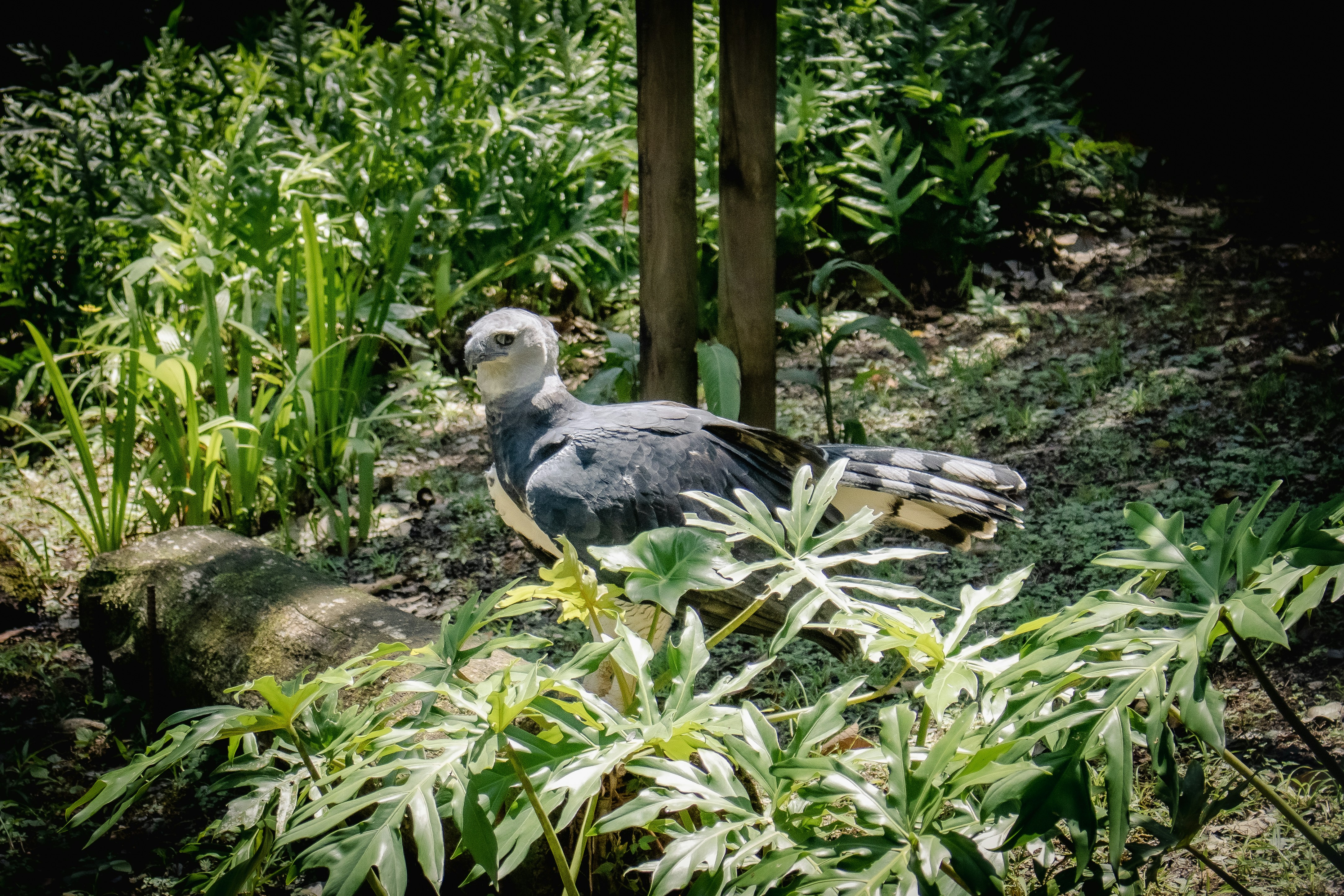
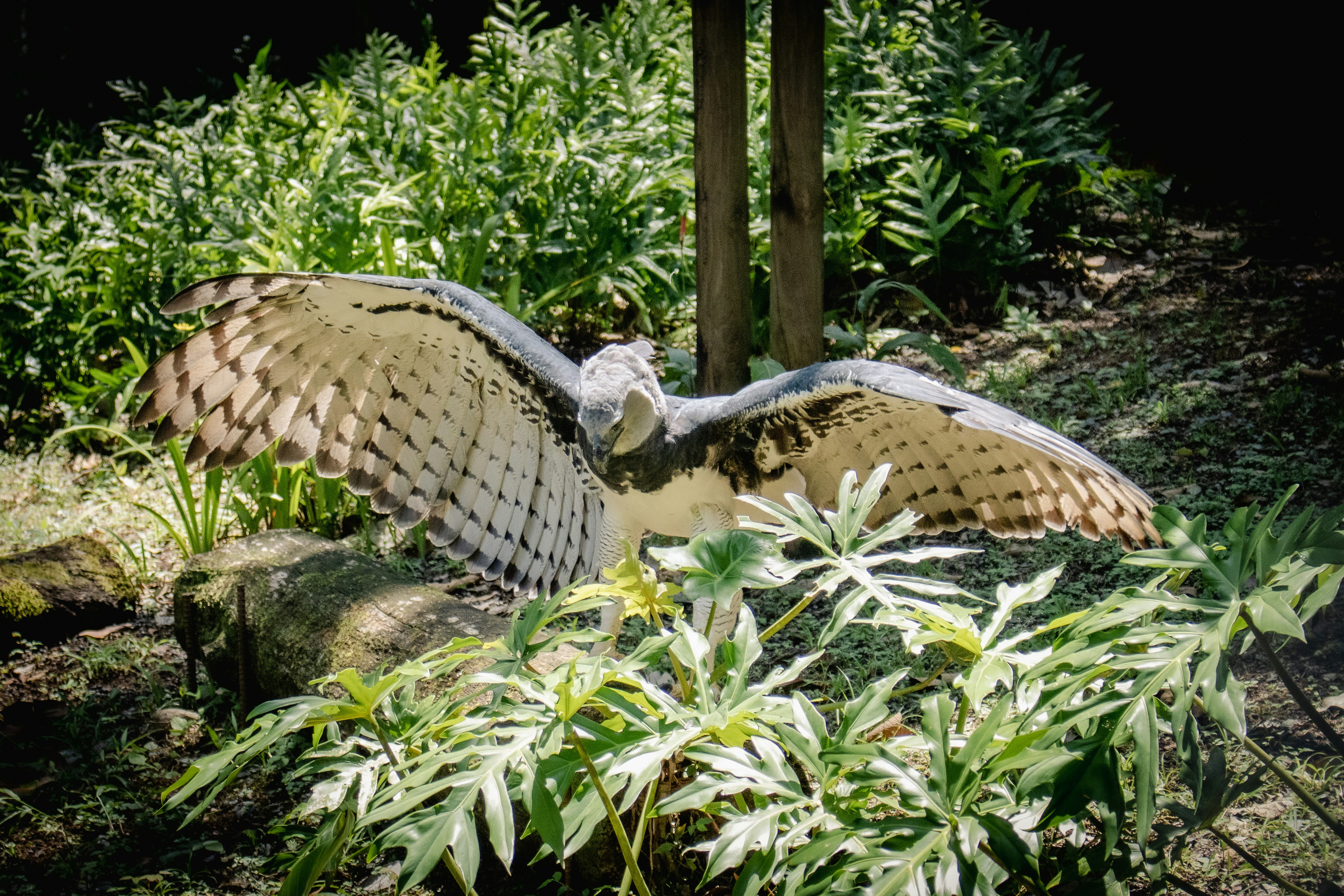
Harpy Eagle

Scientific name: Harpia harpyja

Type: Bird Main biome: Tropical Jungle Difficulty: Alta

Apex predator of the rainforest canopy, dependent on large trees for hunting and nesting.

Quick facts

  • Approximate wingspan 1.8–2.2 m
  • Average weight 6–9 kg (females larger)
  • Life expectancy 30–35 years (captivity)
  • Activity Diurnal
Harpy Eagle
Harpy Eagle
Harpy Eagle

Basic information

  • 🏡 Home: inhabits extensive tropical rainforests with very tall trees and high biomass of arboreal mammals.
  • 🍏 Food: hunts monkeys, sloths and other medium-sized vertebrates, which it captures with its powerful talons.
  • 👫 Sexual dimorphism: females are notably larger and heavier than males.
  • 🐾 Predators: virtually no natural adult predators; nests may be vulnerable to humans and large scavengers.

Life in the wild

What Harpy Eagle is like in its natural environment, with the climate, shelters and resources it needs.

Species overview

The harpy eagle is an emblematic apex predator of American tropical rainforests, highly dependent on continuous forests.

Natural habitat

Prefers mature rainforests with giant trees that allow it to survey, nest, and locate prey.

Behavior

Hunts from strategic perches, launching into short and powerful flights toward prey. Forms stable pairs that raise very few chicks throughout their lives.

Special traits

Its talons and strength place it among the most impressive predators in the bird world.

Conservation and threats

Deforestation, direct persecution, and low reproduction make it vulnerable throughout much of its range.

Curiosities

Striking details about Harpy Eagle that show its biology and ecology in a different way.

  • 🌍 Its talons are comparable in size to those of a small bear.
  • Builds enormous nests in the tops of trees.
  • 🔎 Has vast territories and low reproductive rate.
  • 🧠 Has become a symbol of tropical rainforest conservation programs.

Perfil de bienestar

Aspects to consider if Harpy Eagle is kept in captivity at specialized centers.

Instalaciones y espacio Critical

In captivity needs enormously spacious enclosures, especially in height, with solid structures for perching and flying.

Luz, temperatura y ambiente Critical

Requires diet based on high-quality prey, adjusted to maintain muscular condition.

Manejo y estrés Very delicate

Handling is dangerous and stressful; should only be done with strict protocols and specialized personnel.

Harpy Eagle in captivity

General information aimed at professional facilities and authorized centers. Not intended to promote private keeping of wildlife without proper training and permits.

⚠️ The capture and trade of birds like this species are regulated in many countries. It is essential to verify the legal origin of animals and prioritize responsible breeding programs and habitat conservation.

Instalaciones adecuadas

In accredited zoos, kept in limited display enclosures with refuge areas where the bird can move away from public view.

Alimentación en centros responsables

Captive breeding programs are complex and require highly specialized facilities and equipment.

Manejo y bienestar

Veterinary interventions involve significant logistics and are usually minimized.

Mensaje ético

Its presence in centers should be closely linked to tropical rainforest conservation and the fight against deforestation.

Imagen ampliada