Margay
Scientific name: Leopardus wiedii
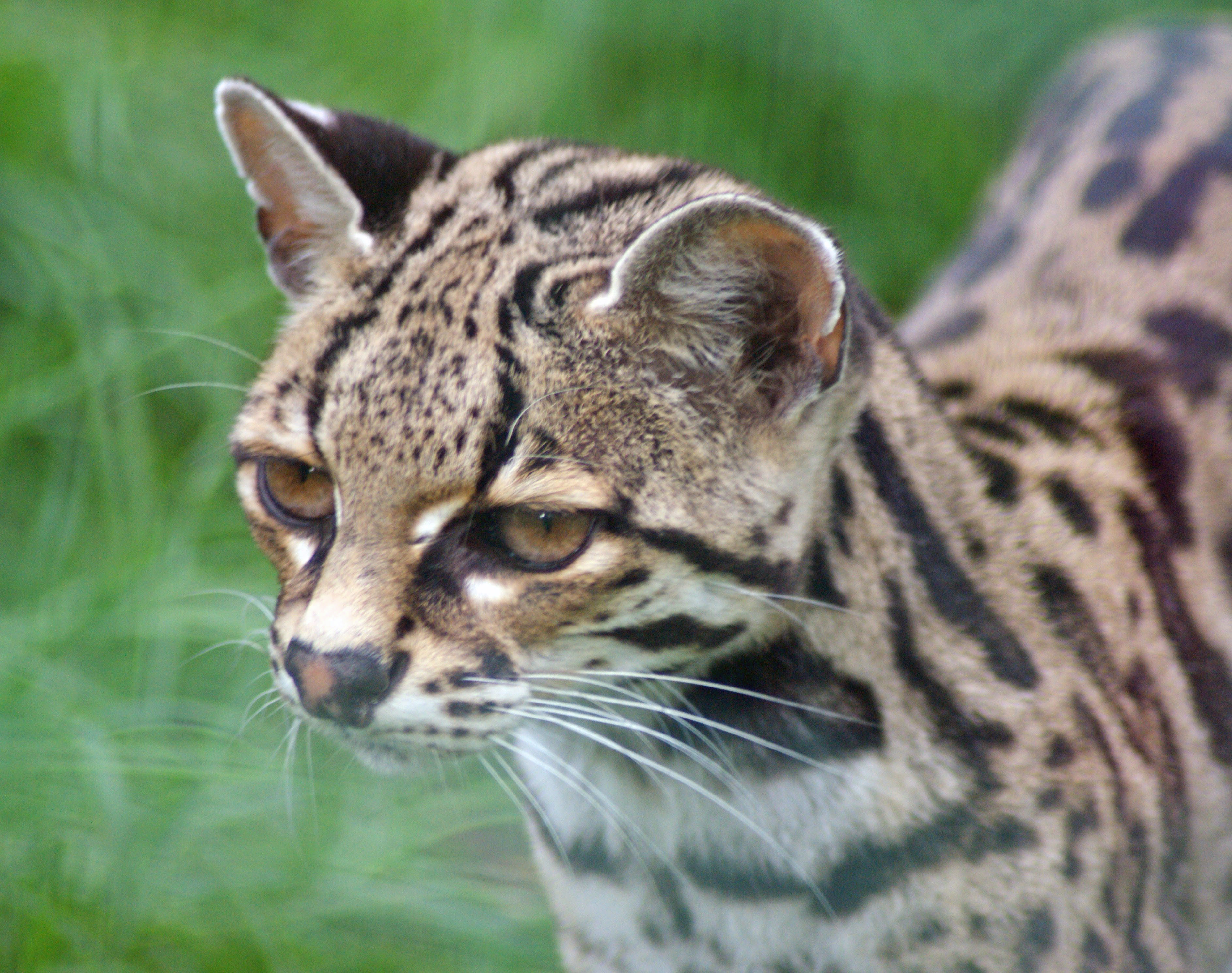
Small arboreal feline with large eyes and extraordinary climbing ability.
Quick facts
- Approximate size45–80 cm
- Average weight2.5–4 kg
- Life expectancy13–20 years
- ActivityNocturnal
Scientific name: Leopardus wiedii
Small arboreal feline with large eyes and extraordinary climbing ability.
What this species is like in its natural environment, with the climate, shelters and resources it needs.
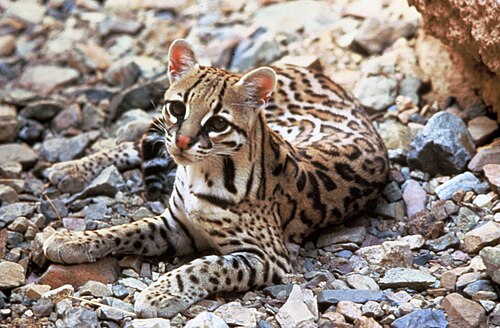
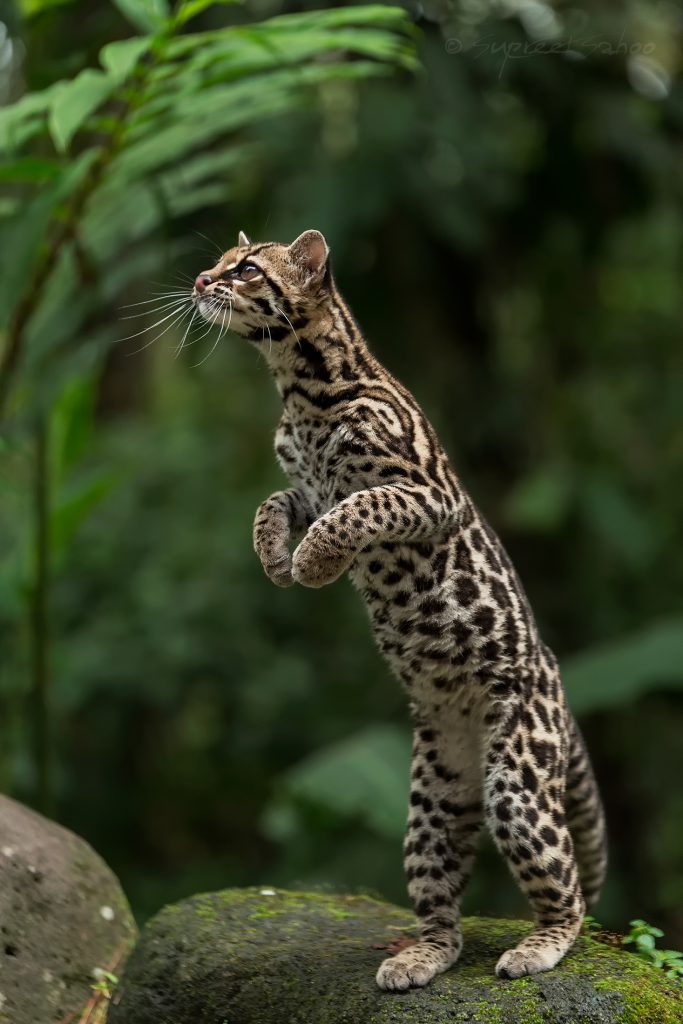
The margay is perhaps the most arboreal feline in America, closely linked to well-preserved rainforests.
Found mainly in mature forests with many trees, lianas and branches for climbing and hunting.
Solitary and very agile, using branches as elevated highways for prey and shelter.
Its ankle joints allow rotating feet backwards, unusual in felines, facilitating climbing and descent.
Forest destruction and habitat fragmentation have reduced many populations; requires large continuous forested areas.
Striking details about this species that show its biology and ecology in a different way.
Aspects to consider if this species is kept in captivity at specialized centers.
In captivity needs very tall and complex enclosures with numerous platforms, logs and elevated shelters.
Lighting, noise and constant public presence must be controlled to minimize chronic stress.
Direct handling should be limited to strictly necessary and supported by training and positive reinforcement.
General information aimed at professional facilities and authorized centers.
Considered a difficult species to manage in captivity and unsuitable for intensive exhibitions.
Diet is based on meat and prey, varying food type to stimulate hunting behavior.
Conservation efforts focus on preserving and restoring tropical forests where it still survives.
This information is for educational purposes and does not replace advice from specialized professionals or consultation of current legislation.