Okapi
Scientific name: Okapia johnstoni
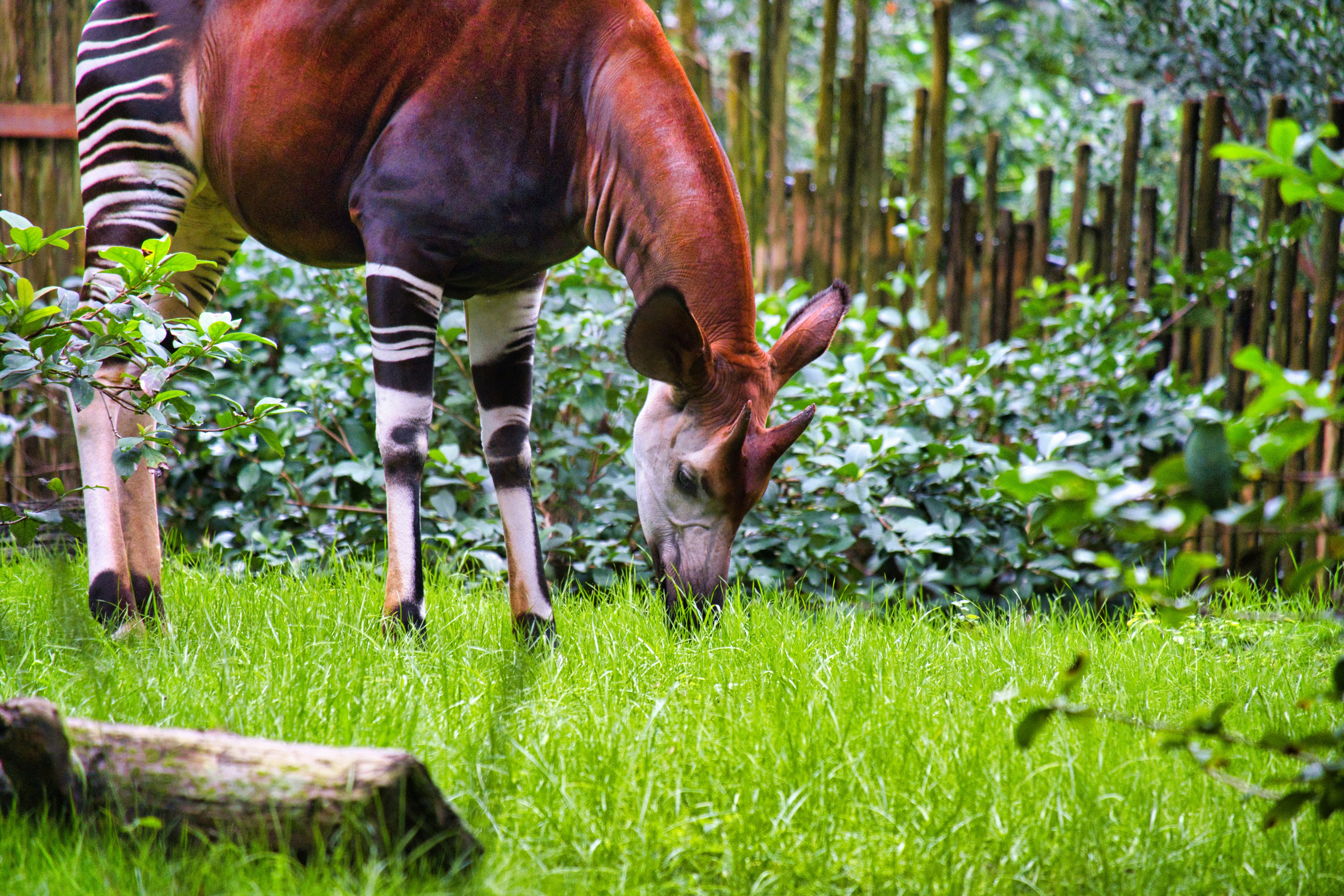
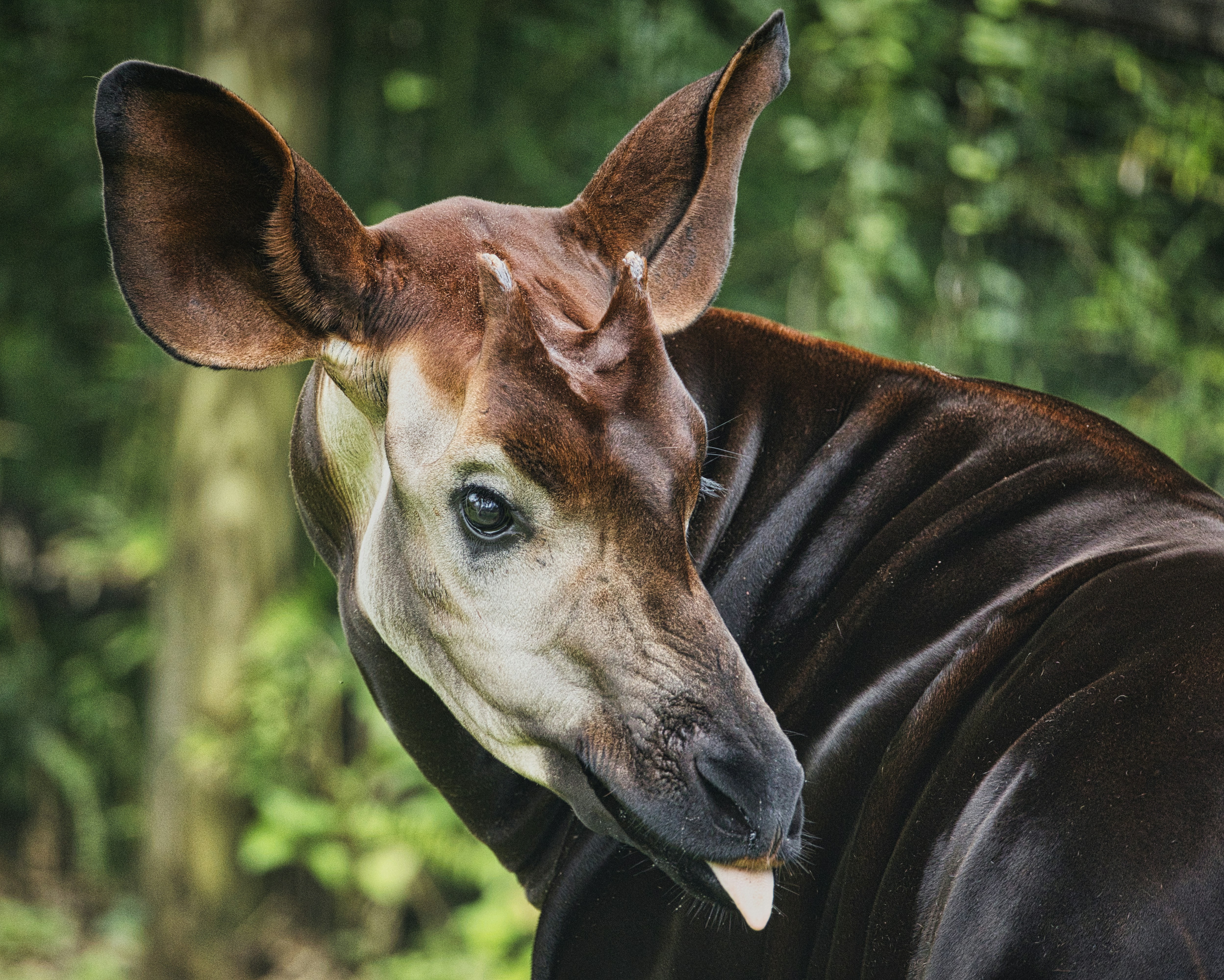
Close relative of the giraffe, with dark body and white stripes on legs.
Quick facts
- Approximate size1.9–2.5 m (length)
- Average weight200–350 kg
- Life expectancy20–30 years
- ActivityDiurnal
Scientific name: Okapia johnstoni
Close relative of the giraffe, with dark body and white stripes on legs.
What this species is like in its natural environment, with the climate, shelters and resources it needs.
The okapi is a large, highly specialized forest mammal living in some of Africa's most remote forests.
Prefers dense rainforests with clearings and watercourses, where it finds varied vegetation for feeding.
Solitary and very secretive, using dense forest to hide from predators and human activity.
Its anatomy combines robust body, relatively long neck and prehensile tongue adapted for browsing.
Threatened by deforestation, illegal mining and regional instability; specific reserves exist for its protection.
Striking details about this species that show its biology and ecology in a different way.
Aspects to consider if this species is kept in captivity at specialized centers.
In captivity needs large forested enclosures with abundant vegetation and refuge areas.
Requires diet rich in leaves, fresh branches and feeds formulated for selective herbivores.
Direct handling is done with cooperative training techniques and must be very careful.
General information aimed at professional facilities and authorized centers.
Few zoos in the world maintain okapis, usually within international conservation programs.
Environmental enrichment includes branches, feeding route variation and acoustic control.
Species survival depends mainly on effective protection of its native forests.
This information is for educational purposes and does not replace advice from specialized professionals or consultation of current legislation.