Oriental Fire-Bellied Toad
Scientific name: Bombina orientalis
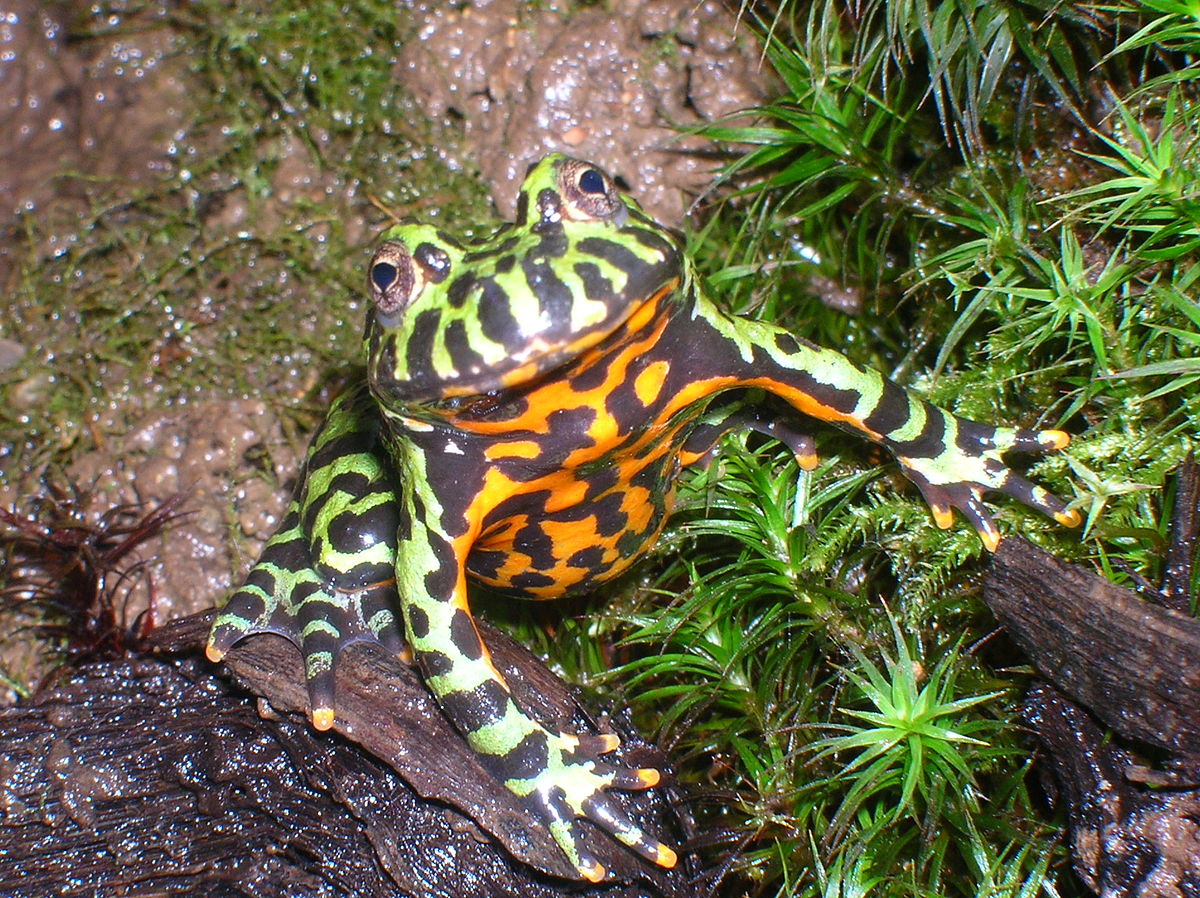
Small semi-aquatic toad with very striking red and black belly colors.
Quick facts
- Approximate size3–5 cm
- Average weight5–10 g
- Life expectancy10–15 years
- ActivityDiurnal / crepuscular
Scientific name: Bombina orientalis
Small semi-aquatic toad with very striking red and black belly colors.
What this species is like in its natural environment, with the climate, shelters and resources it needs.
The oriental fire-bellied toad is a small, very colorful amphibian representative of East Asian wetlands.
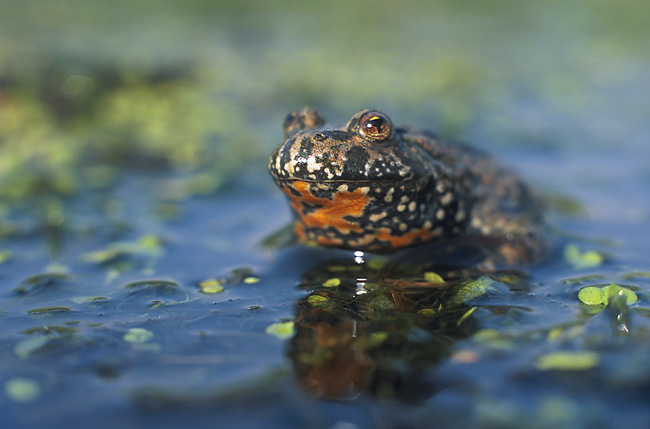
Prefers shallow waters with vegetation, muddy bottoms and easy access to shorelines.
Spends much time in or near water, alternating resting on the surface with short dives.
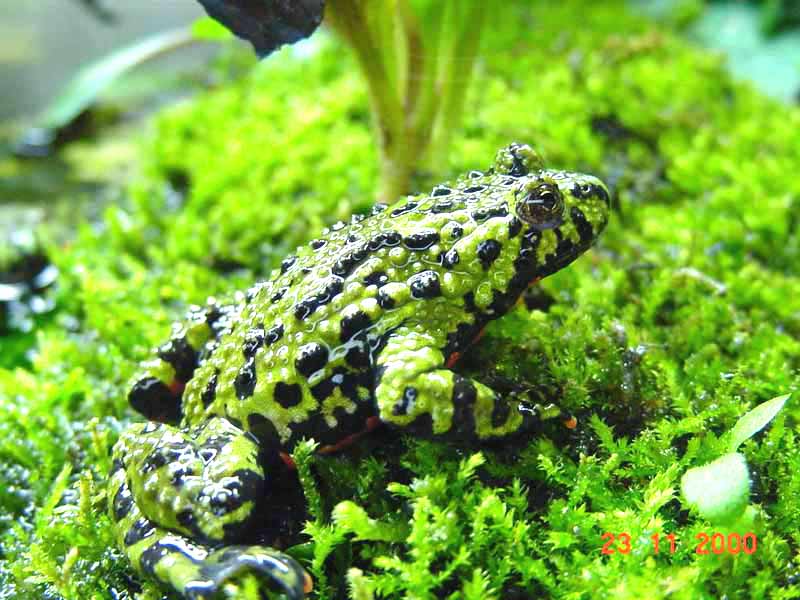
Its red and black belly contrasts with the green mottled back, combining camouflage and warning depending on posture.
Some populations are stable, but pollution and wetland loss are common threats.
Striking details about this species that help better understand its biology and role in ecosystems.
Summary of the most critical points if this species is kept in captivity at specialized centers.
In captivity requires a paludarium with good water surface and emerged areas.
Temperature and water quality are essential to prevent skin diseases.
Although small in size, should not be handled frequently due to its toxins and sensitivity.
General information intended for professional facilities and educational projects. Not intended to encourage capture or improvised keeping of wild amphibians.
Can be successfully kept in responsible collections, always with adequate information to the public.
It is important to provide aquatic and terrestrial hiding spots to reduce stress.
As a striking species, it serves to explain the relationship between coloration and toxicity in amphibians.
This section has an educational purpose. Amphibian conservation involves, above all, protecting ponds, rivers, forests and wetlands, and avoiding irresponsible release of exotic species.