Red-Eyed Tree Frog
Scientific name: Agalychnis callidryas
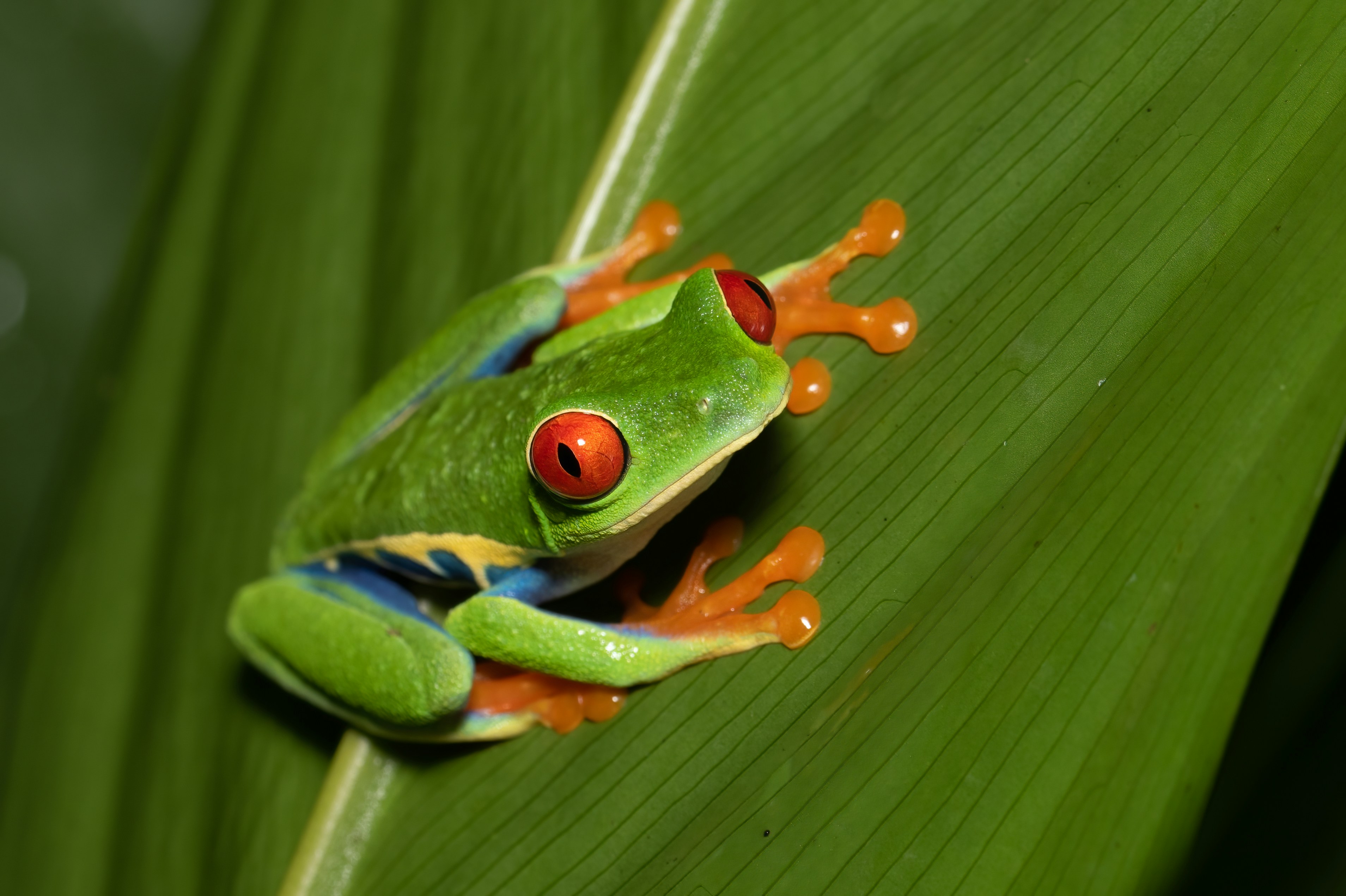
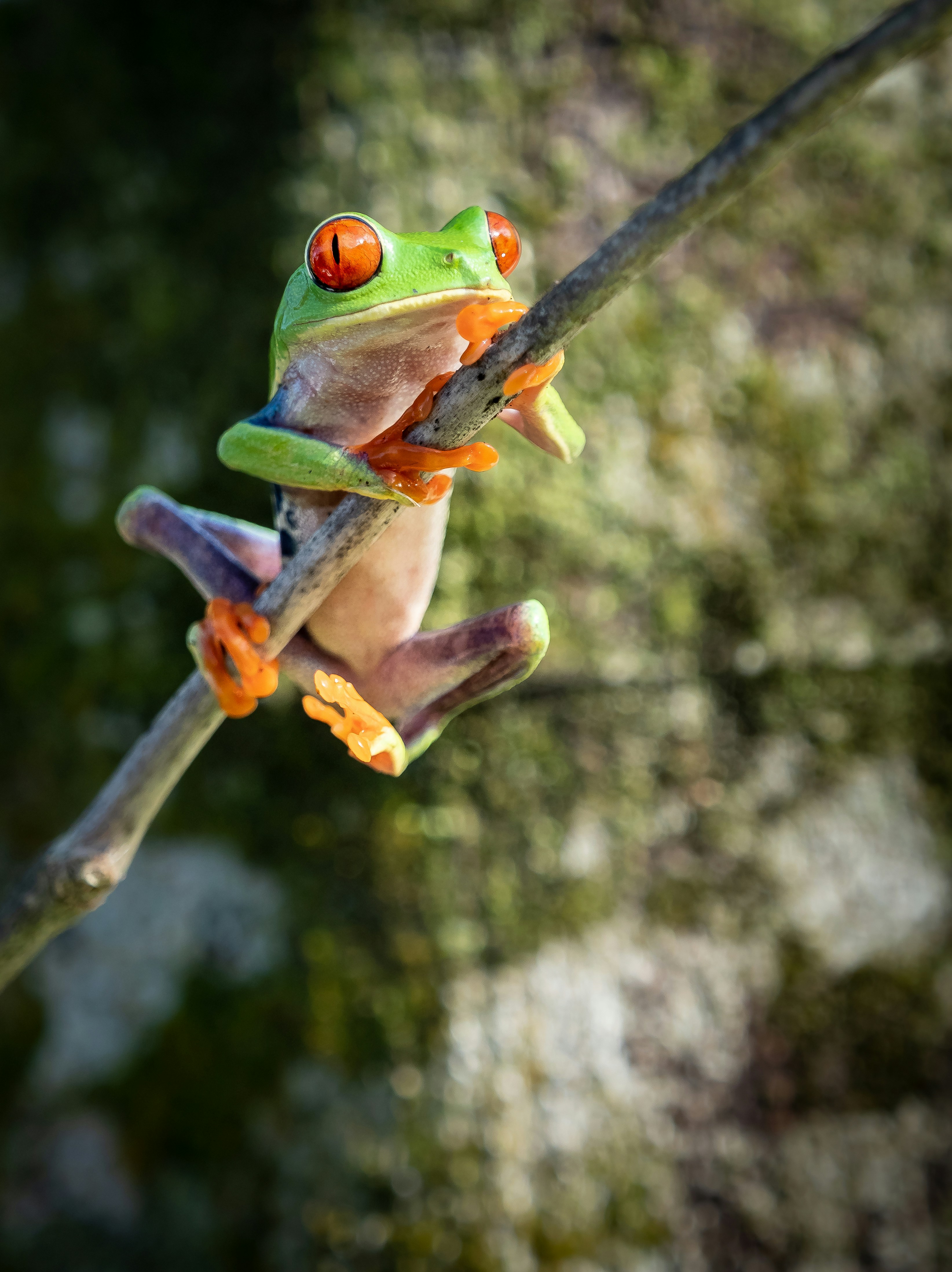
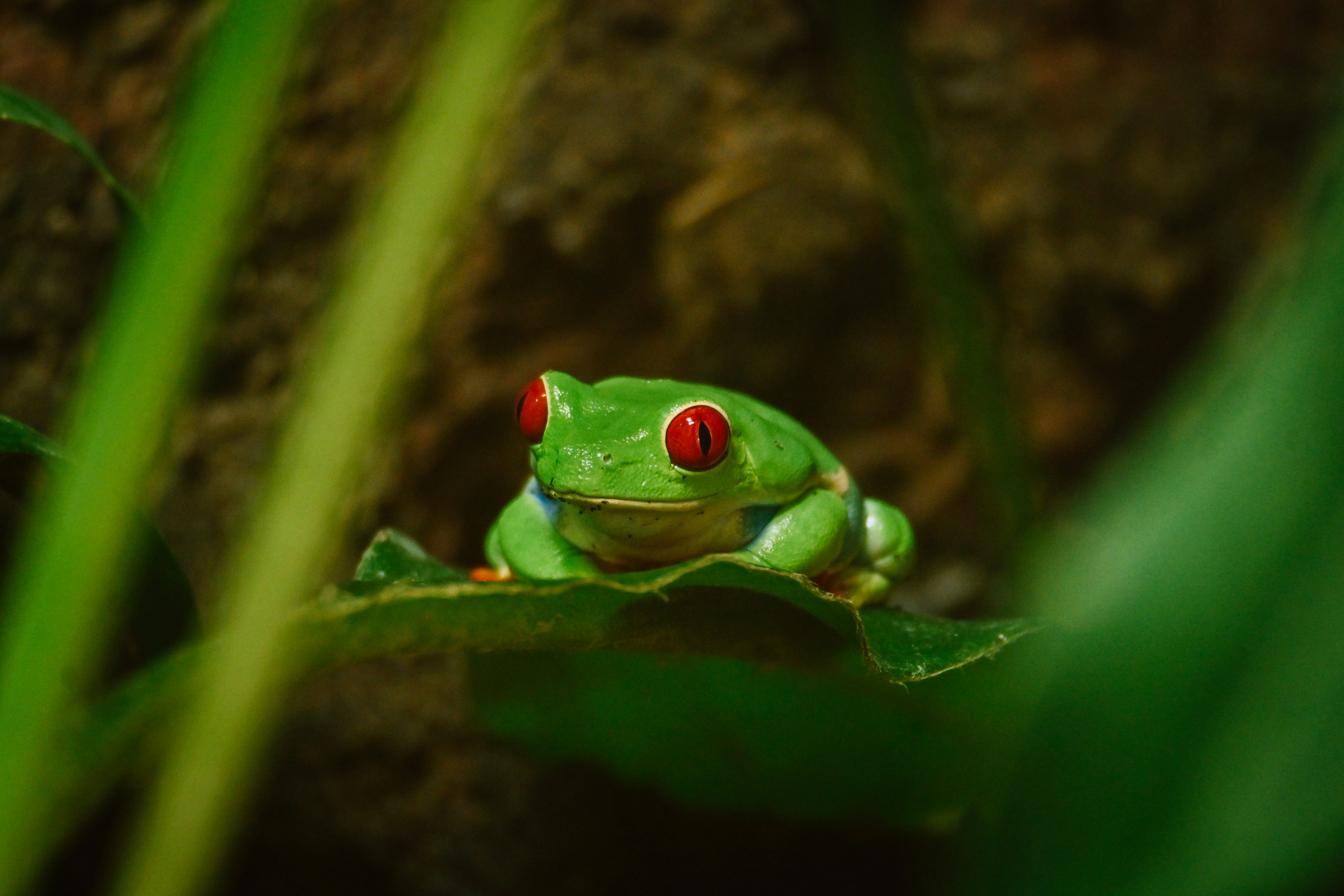
Tropical tree frog famous for its striking red eyes and vivid colors.
Quick facts
- Approximate size5–7 cm
- Average weight6–15 g
- Life expectancy5–8 years
- ActivityNocturnal
Scientific name: Agalychnis callidryas
Tropical tree frog famous for its striking red eyes and vivid colors.
What this species is like in its natural environment, with the climate, shelters and resources it needs.
The red-eyed tree frog is a symbol of Central American tropical rainforests and arboreal amphibian diversity.
Depends on well-preserved humid forests, with dense vegetation and nearby water bodies for reproduction.
It is nocturnal, moves by climbing between leaves and branches, and hunts small invertebrates in vegetation.
Its bright coloration works as a startle signal, going from looking like a green leaf to showing intense colors when moving.
Deforestation and rainforest fragmentation threaten its habitats in various areas.
Striking details about this species that help better understand its biology and role in ecosystems.
Summary of the most critical points if this species is kept in captivity at specialized centers.
In captivity requires heavily planted vertical terrariums, with high humidity and good ventilation.
Needs a light and temperature cycle that mimics tropical forests, avoiding extreme temperatures.
Direct handling should be minimal; its skin is delicate and it stresses easily with manipulation.
General information intended for professional facilities and educational projects. Not intended to encourage capture or improvised keeping of wild amphibians.
Only suitable for experienced keepers or centers specialized in tropical amphibians.
It is important to offer elevated shelters, broad leaves and adequate water points for possible egg laying.
In environmental education it serves to discuss both tropical biodiversity and the effects of deforestation.
This section has an educational purpose. Amphibian conservation involves, above all, protecting ponds, rivers, forests and wetlands, and avoiding irresponsible release of exotic species.