Short-Beaked Echidna
Scientific name: Tachyglossus aculeatus
Small spiny mammal that lays eggs and feeds on ants and termites.
Quick facts
- Approximate size30–45 cm
- Average weight2–7 kg
- Life expectancy15–50 years
- ActivityCrepuscular
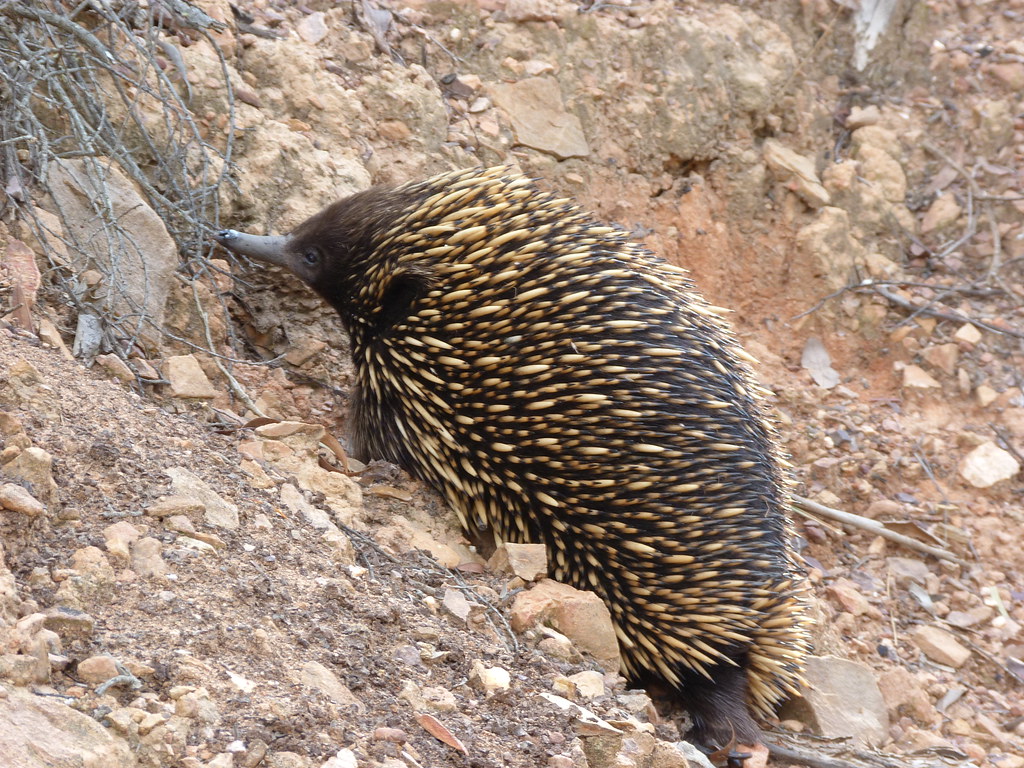
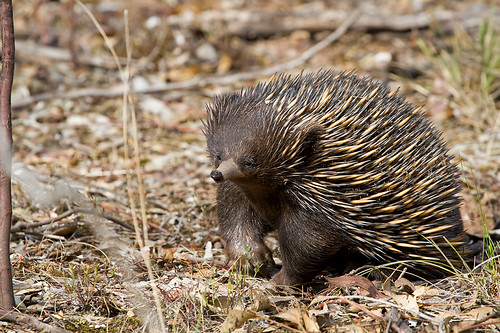
Scientific name: Tachyglossus aculeatus
Small spiny mammal that lays eggs and feeds on ants and termites.
What this species is like in its natural environment.
The short-beaked echidna is a very unique Australian mammal, combining spines and egg-laying reproduction.
Found in a wide variety of habitats as long as there are suitable soils for digging and abundant ant nests and termite mounds.
Solitary, roaming its territory sniffing the ground for insects, using strong legs to dig quickly.
Its long sticky tongue and sensitive snout are perfectly adapted for locating and capturing social invertebrates.
Although still relatively common in many areas, habitat fragmentation and introduced predators are constant threats.
Striking details about this species.
Aspects to consider in captivity.
In captivity needs enclosures with deep structured substrate allowing digging and hiding.
Requires specific diet rich in invertebrates or formulated substitutes, difficult to replicate domestically.
Does not tolerate repeated handling well; stress can affect long-term health.
Information for professional facilities.
Specialized centers design enclosures with multiple substrate layers and underground shelters.
Handling limited to occasional checks, often using minimal restraint and habituation techniques.
Its biological uniqueness makes protecting habitats more valuable than multiplying captive specimens.
This information is for educational purposes.