Tomato Frog
Scientific name: Dyscophus antongilii
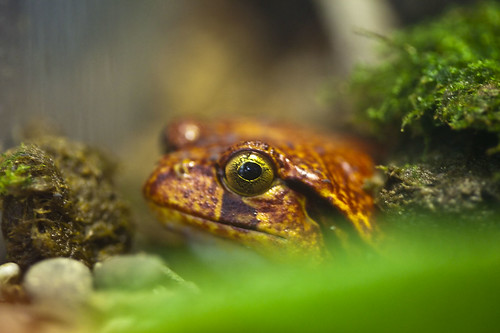
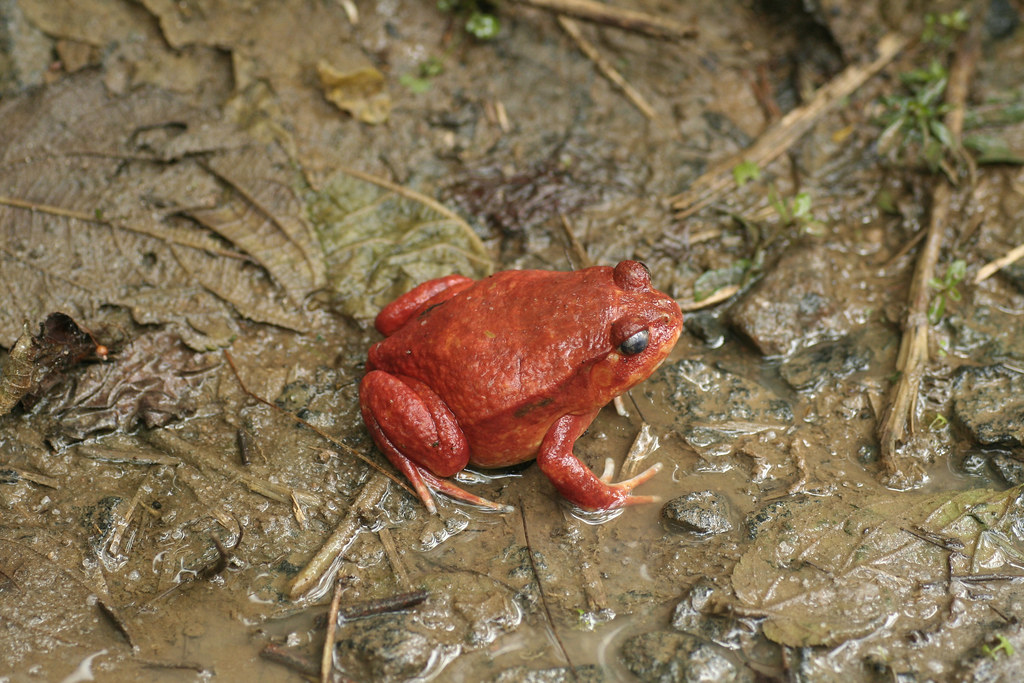
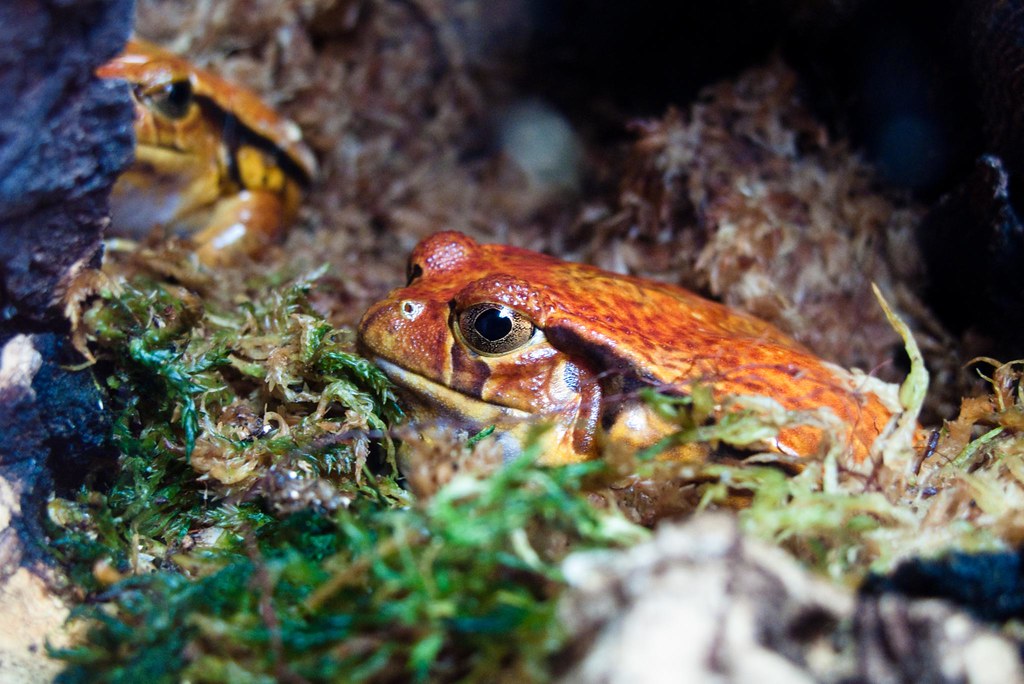
Round-bodied frog with intense red color, endemic to Madagascar.
Quick facts
- Approximate size6–10 cm
- Average weight40–80 g
- Life expectancy6–10 years
- ActivityNocturnal
Scientific name: Dyscophus antongilii
Round-bodied frog with intense red color, endemic to Madagascar.
What this species is like in its natural environment, with the climate, shelters and resources it needs.
The tomato frog is a striking amphibian that helps focus attention on the unique Malagasy biodiversity.
Originally occupied humid forests, but today is also observed in disturbed areas as long as there are ponds and shelters.
Spends much time on the ground, hidden among leaves and roots, coming out at dusk to feed.
Its skin secretes sticky and irritating substances that act as defense against some predators.
Threatened by habitat destruction and excessive collection; protection of key areas is a priority.
Striking details about this species that help better understand its biology and role in ecosystems.
Summary of the most critical points if this species is kept in captivity at specialized centers.
In captivity requires spacious terrestrial terrariums with humid substrate and shelters.
Needs an aquatic area or clean water containers to hydrate and eventually reproduce.
Tolerates observation better than more nervous frogs, but handling should still be minimized.
General information intended for professional facilities and educational projects. Not intended to encourage capture or improvised keeping of wild amphibians.
Can be kept in specialized facilities with responsible criteria, avoiding extraction of wild specimens.
It is useful to offer multiple hiding spots to reduce continuous exposure to the public.
Like other Madagascar species, its story serves to discuss the fragility of island ecosystems.
This section has an educational purpose. Amphibian conservation involves, above all, protecting ponds, rivers, forests and wetlands, and avoiding irresponsible release of exotic species.